Integrated Pest Management (IPM) Checklist for Professional Growers
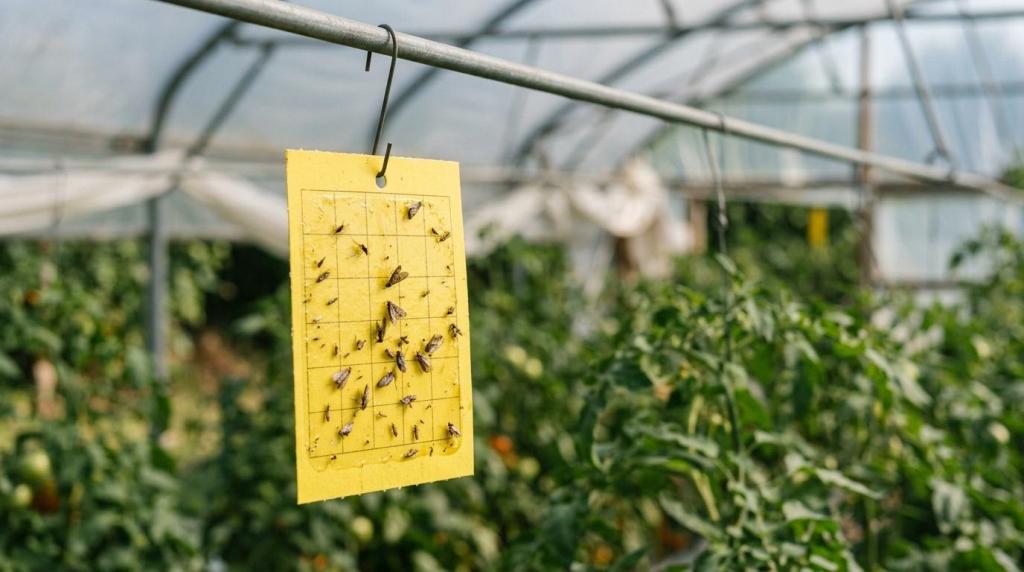
A strong integrated pest management checklist gives professional growers something far more useful than a generic set of reminders. It creates a disciplined decision process, one that links pest pressure, crop stage, weather, beneficial activity and commercial risk before any treatment is chosen.
That matters because profitable crop protection is rarely about reacting quickly to every pest sighting. It is about acting at the right moment, with the right method, and recording the outcome well enough to improve the next decision.
Why an integrated pest management checklist matters for crop protection
Integrated pest management works best when it is practical, repeatable and field-ready. In commercial production, that means moving away from routine calendar spraying and towards threshold-based action supported by regular monitoring. A checklist helps turn that principle into something that can actually be used by farm managers, agronomists and scouting teams every week.
The value is not only agronomic. A good IPM checklist also supports residue management, worker safety, resistance management, sustainability targets and audit readiness. When a business can show why a treatment was chosen, what alternatives were considered, and what happened afterwards, crop protection becomes more consistent and more defensible.
Just as importantly, a checklist keeps prevention in view.
Pest identification and crop monitoring checklist essentials
Every IPM programme starts with correct identification. A leaf symptom, trap catch or damaged fruit can point to very different causes, and each cause may need a different response. Misidentification leads to wasted input, poor timing and unnecessary disruption of beneficial organisms.
Monitoring should be systematic rather than occasional. The field, block or glasshouse area needs a defined scouting frequency, sampling route, sampling unit and named responsibility. That structure gives trend data, and trend data is what turns observation into decision-making.
A useful checklist also links pest monitoring with crop context. Variety, planting date, growth stage, irrigation pattern, previous crop, weed pressure and nearby host plants all shape risk. The pest count alone is rarely enough.
| Checklist area | What to confirm | Why it matters |
|---|---|---|
| Pest identification | Species, life stage, symptoms, look-alikes | Prevents the wrong treatment |
| Crop context | Crop, variety, stage, field history | Changes tolerance and risk |
| Scouting plan | Frequency, route, sample size, responsible person | Makes data consistent |
| Monitoring tools | Visual checks, traps, lures, weather signals | Different pests need different methods |
| Beneficial activity | Predators, parasitoids, parasitised eggs | Can justify delaying intervention |
| Trend review | Counts over time by block | Shows whether pressure is rising or stable |
When monitoring is done well, the checklist becomes more than a form. It becomes a working map of pest pressure across the season.
A practical scouting record should capture:
- pest species and life stage
- crop growth stage
- hot spots and field edges
- beneficial insects present
- weather notes
- photo evidence where needed
Action thresholds and intervention timing in IPM programmes
An action threshold is the point at which pest pressure or disease risk justifies intervention. That point varies by crop, market, growth stage and production system. A fresh-market crop with strict cosmetic standards may need action earlier than a processing crop. A young crop may need protection at lower pest numbers than a mature one.
A trap catch is a signal, not a verdict.
This is why a checklist should never rely on one observation alone. Trap counts need field validation. Field symptoms need identification. Weather-based disease risk needs crop-stage context. Thresholds are strongest when they are used as decision rules rather than rough guesses.
Before treatment is approved, the checklist should answer a few direct questions:
- Threshold source: Where did the trigger point come from, and is it suitable for this crop and site?
- Trend direction: Are counts rising, stable or falling across recent observations?
- Crop vulnerability: Is the crop at a stage where economic or quality loss is likely?
- Beneficial pressure: Are natural enemies active enough to suppress the pest?
- Timing window: Can a non-chemical or selective option still work at this life stage?
That short discipline often prevents unnecessary applications and improves timing when intervention really is needed.
Control options in an integrated pest management checklist
A professional IPM checklist should show the order in which control options are considered. Prevention comes first, then monitoring-led suppression, then targeted intervention where needed. This keeps the programme focused on least-disruptive effective action, not habit.
Cultural control remains one of the strongest lines of defence. Crop rotation, hygiene, host weed removal, nutrition balance, irrigation management, resistant varieties and canopy management all shape pest and disease pressure long before a product is applied. These actions are not glamorous, though they often determine whether the rest of the programme works.
Biological and physical methods deserve equal weight in the checklist. Conservation of beneficial insects, release programmes where appropriate, removal of infested material, exclusion methods and trapping can reduce pest pressure without placing the full burden on chemistry. In many systems, these methods also sit better with residue targets and resistance strategies.
Semiochemical tools have become especially valuable in this space. Pheromone lures, attractants, mass trapping and mating disruption can provide early warning and, in some cases, direct suppression. For growers working with providers of semiochemical, biocontrol and technical agronomy solutions, these tools fit naturally into an IPM framework because they can improve monitoring precision while reducing reliance on broad-spectrum treatments.
A sensible decision order often looks like this:
- prevention and sanitation
- cultural correction
- biological support
- trapping or mating disruption
- selective chemical intervention if thresholds are met
Record-keeping and audit readiness in integrated pest management
No professional IPM checklist is complete without records that are useful after the day of treatment. Growers need to know what was seen, what threshold was used, what action was taken, and whether it worked. Without that loop, each season starts from scratch.
Good records also support audits, retailer expectations, assurance schemes and internal review. They connect scouting, treatment choice, residue awareness and operator safety into one traceable process. That is especially valuable where multiple blocks, varieties or markets are involved.
The most useful records are the ones that make next week’s decision easier.
In practice, that means keeping scouting logs, trap logs, treatment logs, weather notes, product details, mode-of-action references and follow-up assessments in one linked system, whether digital or paper-based.
Using semiochemical and biological tools in an integrated pest management checklist
Modern IPM is stronger when species-specific tools are placed early in the programme. Monitoring lures and traps can give earlier warning than visible crop damage. Mating disruption can reduce pest reproduction pressure. Behaviour-modifying technologies can help shift programmes away from repeated blanket sprays.
Biological products also deserve a clear place on the checklist, especially where the aim is to support plant health and reduce chemical pressure. Biocontrols, biostimulants and biofertilisers do different jobs, though together they can contribute to a crop that is more resilient and easier to protect. The key is to use them with timing, pest biology and crop need in mind rather than as broad promises.
Technical support matters here. A good product still needs the right trap density, placement, lure replacement interval, application timing and follow-up monitoring. When growers can pair innovative tools with practical agronomy guidance, adoption becomes more reliable and outcomes become easier to measure.
A practical weekly integrated pest management checklist for professional growers
The strongest IPM checklists are simple enough to use every week and detailed enough to support a commercial decision. If the document is too vague, it will be ignored. If it is too complicated, it will slow the team down.
A weekly rhythm can be built around five steps:
- Inspect and identify: Confirm pest, life stage, crop stage and beneficial presence.
- Measure and compare: Record counts from scouting and traps, then compare with the agreed threshold.
- Choose the least-disruptive effective option: Start with cultural, biological, physical or semiochemical tools where they fit.
- Treat with precision: If chemistry is justified, check selectivity, resistance group, timing, PHI, REI and weather.
- Review the result: Re-monitor, record efficacy and adjust the programme if pressure persists.
What makes this approach powerful is consistency. Over time, the checklist becomes a decision asset rather than an administrative task. It sharpens field scouting, improves communication between growers and advisers, and builds confidence in each intervention.
For professional growers aiming to protect yield, preserve efficacy and run a cleaner crop protection programme, that is exactly what a well-built IPM checklist should do.
When monitoring is done well, the checklist becomes more than a form. It becomes a working map of pest pressure across the season.