IQ-EPP Early Protection Programme: Season-Long IPM Planning and Implementation
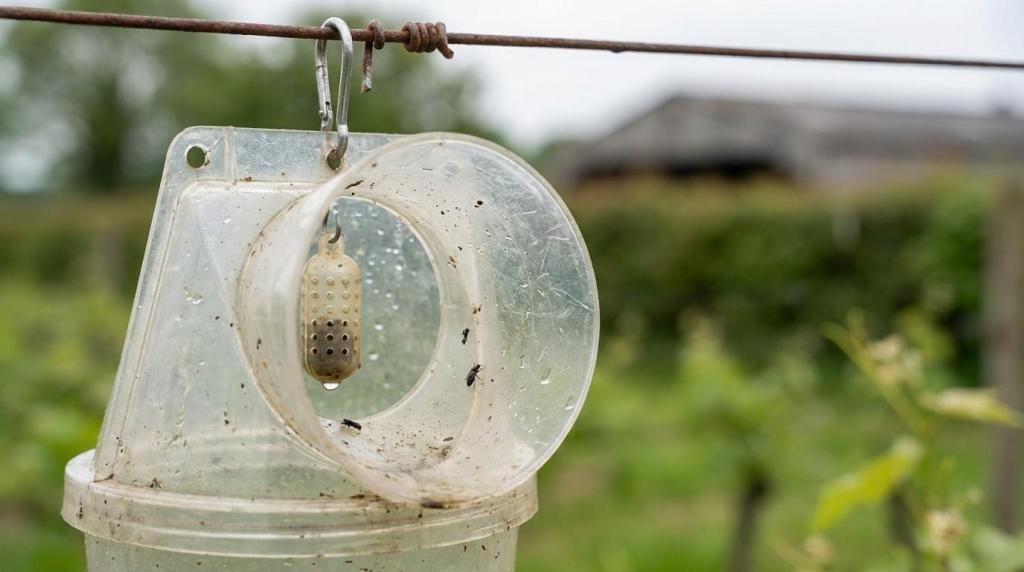
Pest pressure rarely arrives on schedule. A few individuals can slip in unnoticed, build quickly, then leave growers reacting with limited options. An early protection programme shifts that pattern. It puts reliable monitoring in place before the crop is under stress, so decisions are made with evidence, not guesswork.
Crop IQ Technology Ltd supports this approach through IQ-EPP, a structured, season-long way to plan and run Integrated Pest Management (IPM) using semiochemical monitoring, targeted interventions and practical technical support. The goal is simple: find problems early, respond precisely, and keep beneficials, operators and the wider environment in mind.
Why early protection changes the shape of IPM
Traditional scouting is valuable, yet it can miss the first wave of flight activity or low-density incursions, especially when weather and labour availability are working against you. Semiochemical traps act as dependable sentinels, operating day and night and focusing attention on the pests that matter most.
Early warning improves more than timing. It improves choice. When you know which pest is present and where pressure is building, you can select the lightest effective response, often avoiding blanket applications and protecting natural enemies that do free work in the crop.
A strong early protection plan also supports compliance and market demands, because monitoring records and decision logic are clearer and easier to defend.
What the programme delivers in practice
IQ-EPP is built around three connected elements: early deployment, disciplined monitoring, and pre-agreed responses. It can be run on a single site, scaled across multiple farms, or coordinated as a wider surveillance network through partners.
After an initial risk review, traps and lures are selected and placed to reflect crop type, nearby habitats, historic pressure, likely entry routes, and operational realities. Counts are then collected on a routine cadence and linked to decision thresholds and response options.
This turns monitoring into management, rather than a box-ticking exercise.
Monitoring tools as field-ready sensors
Semiochemical lures and simple trap formats are often the most efficient way to collect comparable data across a season. Crop IQ’s IQ LURE range includes species-specific pheromone and kairomone lures for monitoring, mass trapping and other behaviour-based tactics. These are paired with trap types that suit the target pest, crop structure and handling needs.
Below is a practical view of common tool choices and what each tends to contribute to an early protection plan.
| Tool | Typical role in IQ-EPP | What you gain from the data |
|---|---|---|
| IQ LURE pheromone and kairomone lures | Species-specific attraction for monitoring or control tactics | Cleaner diagnostics, clearer peaks, fewer false signals from non-target insects |
| Sticky boards and rolls (IQ Sticky) | Broad capture of flying insects, quick deployment | Early indication of general flight activity and secondary pests |
| Glue solutions (IQ Glue-Cap and related formats) | Persistent, non-drying capture for targeted pests | Stable week-to-week comparability when conditions are harsh |
| Light and water trap formats (including smart concepts under development) | Attraction of nocturnal and migratory moths | Better visibility of night flights that are often missed in visual scouting |
| AI-enabled trapping options (where deployed) | Automated identification or counting support | Faster reporting, fewer manual errors, improved consistency between sites |
Traps are only as good as their placement and maintenance. IQ-EPP focuses on repeatable positioning, consistent inspection intervals, and clear labelling so that counts remain meaningful when workload rises.
Turning counts into decisions, not just charts
Monitoring becomes powerful when it is linked to agreed thresholds and responses. Thresholds may come from local extension guidance, crop protocols, retailer standards, or site history. Where formal thresholds are not available for a specific pest or crop, a pragmatic baseline can be set and refined through season data.
A well-run early protection plan typically produces:
- Earlier warning: evidence of pest presence before visible symptoms or damage
- Cleaner targeting: the right response for the right pest, in the right place
- Confidence to hold back: fewer precautionary treatments when risk is low
- Proof of effect: trap trends before and after action to judge whether control worked
Because the lures are species-specific, decisions can be more selective. This supports biological control and pollinator safety, while keeping chemical options available for when they are genuinely needed.
Season-long IPM planning that still fits real farm logistics
IQ-EPP is designed to sit inside a broader IPM plan, not replace it. The strongest outcomes come when trapping data is read alongside crop stage, irrigation pattern, canopy density, and local weather.
A season plan often includes pre-set “decision windows” where pressure tends to rise, then uses monitoring to confirm whether that risk is actually arriving. That can influence the timing of selective sprays, natural enemy releases, sanitation, exclusion steps, or targeted mating disruption deployments.
Timing matters, yet so does workload. A practical programme accepts that labour peaks exist, then designs monitoring that stays reliable through them. That may mean fewer trap types with higher diagnostic value, or a wider spacing that still provides early warning at field edges and known entry points.
How implementation works, step by step
IQ-EPP is commonly introduced through a short planning phase, then moves into routine field operation. Technical guidance can be provided through Crop IQ’s support channels, including Ask Dr. IQ, with protocols adapted to crop, climate and pest risk.
After an initial review, teams usually follow a workflow like this:
- Define the pest risk list: priority pests, likely arrival routes, and any invasive or resistant threats of concern.
- Select lures and traps: match the biology of the target pest to the most informative trap format.
- Set a placement map: edges, gateways, shelter belts, packing areas, glasshouse entry points, or other high-risk zones.
- Agree inspection frequency and data fields: date, trap ID, lure batch or change date, counts by species, crop stage notes.
- Set action triggers: thresholds or escalation rules, plus who authorises action and how quickly.
- Review weekly: trend direction matters as much as the absolute number; revise responses when conditions change.
This is structured enough to be repeatable, yet flexible enough to suit different crops and operational constraints.
Support for multi-site and public-sector programmes
Early warning improves when more people are looking in a coordinated way. IQ-EPP can be run across a group of farms, through distributors, or in partnership with councils and public associations for area-wide preparedness. In these cases, consistent protocols matter even more than trap density.
Shared reporting enables faster recognition of spread patterns, supports targeted advisories, and helps focus resources on hotspots rather than treating every site as equal risk.
Data integrity is a practical focus: clear labelling, routine lure replacement, consistent counting rules, and simple audit trails. When programmes are large, this discipline protects the value of the whole network.
Where semiochemicals and biological tools meet
Semiochemicals are central to monitoring, yet they can also support control tactics that reduce reliance on broad-spectrum chemistry. Depending on the pest and crop, an early protection plan may connect monitoring to options across Crop IQ’s wider portfolio, including behaviour-modifying tools, biocontrols, pathogen and nematode solutions, and plant health inputs.
A strong IPM plan keeps chemistry as one tool among many. With early warning, it becomes easier to choose softer options first, keep residues low, and preserve efficacy by avoiding unnecessary selection pressure.
What growers and agronomists tend to value most
IQ-EPP is often selected when teams want to move from reactive control to planned control, without adding complexity that cannot be sustained through the season.
Many programmes focus on benefits that are operational as well as agronomic:
- Faster decisions: clearer triggers when pressure starts rising
- Lower waste: fewer “insurance” passes when monitoring stays quiet
- Better crop protection: earlier intervention before damage is locked in
- More resilient IPM: reduced pressure on insecticide modes of action
The most useful outcome is often confidence. When the trap line stays flat, you can keep resources back for when they are truly needed. When it rises, you act early, with purpose, and with a record that supports the decision.