How to Cut Botrytis Risk in Strawberry Crops
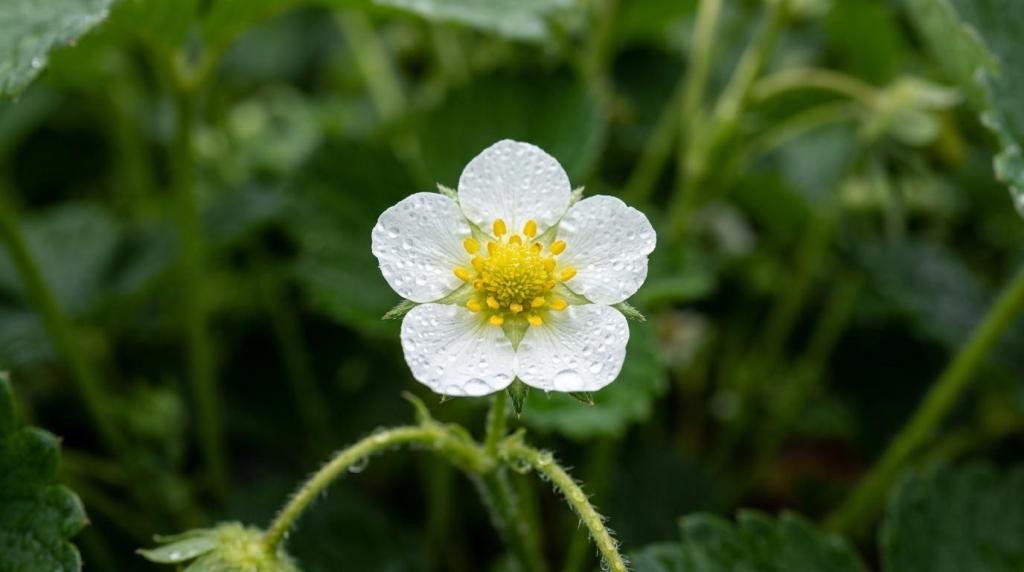
Botrytis can turn a promising strawberry crop into a fast-moving quality problem, especially when flowering coincides with cool, damp weather. The disease, caused by Botrytis cinerea, is often first noticed on fruit, yet the real battle usually starts earlier, at bloom.
That timing matters because many infections begin in flowers and stay hidden until berries start to ripen. By the time soft fruit shows the familiar grey sporulation, the best prevention window may already have passed. A strong programme focuses on flower protection, moisture reduction, clean crop hygiene and resistance-aware chemistry, supported by better field data.
Why Botrytis control in strawberries starts at bloom
In strawberries, Botrytis is not simply a harvest disease. It is very often a flower-stage disease that reveals itself later. Spores land on blossoms, infect floral tissues under wet conditions, and then remain quiet until fruit development creates the right conditions for visible rot.
This is why late reaction rarely feels satisfying. Removing rotten berries during picking is useful, but it does not replace earlier protection. If bloom was exposed to prolonged wetness, high humidity and cool temperatures, the infection risk may already be built into the crop.
One strong habit changes everything: treat flowering as the centre of the Botrytis programme.
Growers who frame Botrytis risk around bloom tend to make better decisions on timing, labour planning and product rotation. They are not waiting for symptoms. They are asking a sharper question: what is the infection risk in this block today, and how exposed are the open flowers?
Weather risk and canopy microclimate in strawberry Botrytis control
Botrytis pressure rises when three factors come together: susceptible tissue, available inoculum and a wet canopy. In practice, the most reliable warning signs are prolonged leaf wetness, extended humidity, frequent rainfall, misting or overhead irrigation, and temperatures that sit in a favourable range for infection. Guidance from several extension sources repeatedly points to cool, wet conditions as the main driver.
Leaf wetness duration is especially useful because it captures what the plant actually experiences. A field may receive modest rainfall overall, yet still remain wet for long periods inside a dense canopy. When wetness stretches beyond roughly 13 to 16 hours, risk climbs sharply. In many strawberry systems, that can happen after overnight condensation, close plant spacing, poor airflow or slow drying after rain.
Protected production can shift this picture in a positive direction. Tunnels and other covered systems do not remove Botrytis risk, but they can cut much of the free moisture needed for infection and spore movement. That benefit is strongest when venting, irrigation discipline and canopy management are also handled well.
Risk factor | Why it raises Botrytis pressure | Practical response |
| Open bloom during cool, damp spells | Flowers are highly vulnerable infection sites | Protect at flowering, not after symptoms |
| Leaf wetness lasting many hours | Wet surfaces allow infection to begin | Track canopy drying time, not just rainfall |
| Dense canopy | Traps humidity and slows drying | Manage spacing, leaf area and airflow |
| Frequent rain or overhead water | Spreads spores and keeps tissues wet | Reduce avoidable wetting, improve drainage |
| Rotten fruit and plant debris | Increases local inoculum | Remove infected material quickly |
| Repeated use of one fungicide mode | Selects resistant Botrytis populations | Rotate modes of action carefully |
Sanitation and moisture management for lower Botrytis pressure in strawberries
Sanitation sometimes gets treated as routine housekeeping, yet it has a direct effect on disease pressure. Infected berries, senescing flowers and crop debris are all sources of inoculum. When they remain in the field or tunnel, each wet period becomes more dangerous.
Clean-up is most valuable when it is timely. Fruit left after wet weather, damaged berries hidden under the canopy and residue after harvest all help Botrytis persist. A tidy crop does not guarantee clean fruit, but it lowers the number of opportunities the pathogen gets.
Moisture management works alongside sanitation. The aim is simple: reduce the hours when flowers, leaves and fruit remain wet. This is partly about weather, which no one controls, and partly about system design and daily discipline, which growers do control.
Useful sanitation and moisture actions include:
- Removing infected berries promptly
- Clearing dead flowers where practical
- Preventing standing water
- Avoiding unnecessary canopy wetting
- Improving air movement
- Cleaning up residue after harvest
In open-field crops, straw condition, bed shape and drainage can influence how quickly fruit dries after rain. In protected systems, venting strategy matters just as much. A covered crop with poor airflow can still carry high humidity, heavy condensation and a persistent Botrytis problem.
Fungicide strategy for Botrytis control in strawberry crops
Chemistry remains an important tool in many commercial strawberry programmes, though it works best as part of a broader plan rather than as a rescue-only measure. The goal is to protect healthy flowers and fruit before infection occurs, with timings linked to bloom stage and weather risk.
A common mistake is to think only in terms of product strength. Timing and rotation are just as important. If a spray goes on after a high-risk bloom infection event, expectations should be modest. If the same mode of action is used too often, performance may slide even when timing looks right.
Resistance is a real issue in Botrytis cinerea. Research from strawberry production systems has documented resistance across multiple fungicide groups, and within-season shifts can occur. That means a programme built around repeated use of one chemistry is vulnerable, even where it once worked well.
A stronger approach is to treat fungicides as part of resistance management, not just disease knockdown. Read labels closely, respect local approvals and resistance guidance, and rotate modes of action rather than relying on trade-name changes that hide similar active groups.
When planning a resistance-aware programme, focus on these points:
- Rotate modes of action: Avoid back-to-back use of products with the same FRAC group where guidance advises against it.
- Protect bloom periods: Keep the strongest timings centred on open flowers and forecast wet spells.
- Match intervals to risk: Tighten spray intervals during sustained cool, humid weather and active flowering.
- Avoid weak repetition: Reapplying familiar products under pressure can speed resistance selection.
- Integrate non-chemical actions: Clean fields and drier canopies reduce pressure on chemistry.
In many businesses, this is where technical support earns its value. A resistance-aware programme is more than a product list. It depends on local history, cultivar behaviour, production system, recent weather and the likely length of the bloom period.
Biological and cultural tools in strawberry Botrytis programmes
Biological products and plant health inputs can also have a place, especially in programmes aiming to reduce reliance on conventional chemistry or improve flexibility across a long season. Their value is usually highest when they are placed preventatively and supported by good canopy and hygiene management.
No biological input should be expected to overcome heavy infection pressure on its own. Still, in a well-run integrated programme, biologicals, biocontrols and carefully selected plant health tools can help build resilience around sensitive periods, especially where market, residue or sustainability goals are shaping the spray plan.
Data-driven Botrytis control in strawberries
The best Botrytis decisions rarely come from rainfall totals alone. A field can receive similar rain to a neighbouring block and still face a very different disease outcome because canopy density, airflow, row orientation, variety, flowering stage and drying time are different.
That is why crop data matters. Decision support systems built around weather signals can estimate risk more accurately than a general forecast because they connect disease biology with site conditions.
A practical data set for Botrytis management often includes:
- Flowering stage: Open bloom means high susceptibility.
- Leaf wetness duration: Extended wet periods signal rising infection risk.
- Humidity and temperature: Cool to mild, humid conditions favour disease development.
- Canopy density: Thick growth slows drying and traps moisture.
- Recent sanitation status: Residue and infected fruit raise inoculum pressure.
This does not need to become overly complicated. Even a simple routine of recording bloom stage, overnight humidity, wetness hours and visible crop residue can improve timing decisions. Where sensors and field-level forecasting are available, the gains can be bigger still, especially in seasons with frequent weather swings.
Practical crop actions for wet-weather Botrytis risk in strawberries
When a wet spell arrives during flowering, speed and structure matter. Growers who already know which blocks carry the highest risk can act decisively. Fields with dense canopies, previous disease pressure, poor airflow or delayed sanitation should move to the front of the queue.
That priority setting can save both crop quality and labour.
During active risk periods, it helps to review a short checklist every few days rather than waiting for the weekly spray meeting. Botrytis can move from background risk to commercial threat quickly when bloom, moisture and inoculum line up.
A useful weekly review can include:
- Flowers present: How much open bloom is exposed right now?
- Wetness hours: How long did the canopy stay wet after the last event?
- Humidity pockets: Which blocks are drying slowly?
- Sanitation standard: Is infected fruit being removed fast enough?
- Programme rotation: Are upcoming choices resistance-aware?
- Short picking intervals
- Venting checks in covered crops
- Irrigation timing review
Harvest period pressure and fruit quality protection in strawberry Botrytis control
Harvest is where Botrytis becomes visible, commercial and expensive. Berries soften, latent infections break, sporulation increases, and handling pressure exposes weak fruit quickly. The cost is not only yield loss. Shelf life, pack-out, customer confidence and labour efficiency all suffer.
Yet harvest performance is largely shaped by what happened earlier. Blocks protected well at bloom, kept cleaner through the season and managed for faster drying usually carry lower fruit rot pressure when picking begins. The harvest team then spends less time handling unsaleable fruit and more time moving marketable yield.
This is also why post-rain sanitation matters so much. After wet weather, infected fruit can become a fresh inoculum source within the crop. Removing it rapidly helps protect the next wave of ripening berries, especially in warm, humid picking conditions.
For businesses aiming to cut Botrytis risk consistently, the path is clear. Protect flowers before infection, reduce moisture wherever possible, keep the crop clean, and build fungicide programmes around resistance management rather than repetition. Add better field data to those basics, and Botrytis control becomes less reactive, more precise and far more dependable.