How to Choose the Right Pheromone Lure: Species Specificity, Release Rate, and Field Longevity
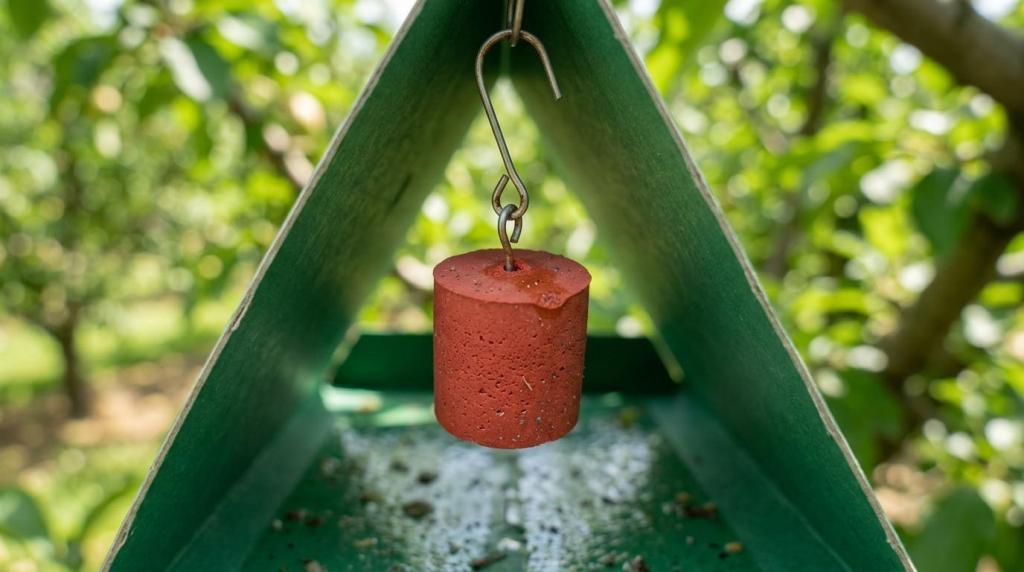
Choosing a pheromone lure looks simple until trap counts start shaping spray timing, labour plans, export quality, and margin. A lure is not just a scent source. It is a decision tool, and the quality of that tool depends on how precisely it matches the pest, how steadily it releases its active compounds, and how long it keeps working in real field conditions.
That is why two lures aimed at the “same pest group” can perform very differently. One may give clean, reliable monitoring data for weeks. Another may lose strength too quickly, attract non-target insects, or miss the peak of a flight altogether. For growers and agronomists, the right choice can sharpen IPM decisions and reduce wasted inputs.
Why pheromone lure choice matters for pest monitoring
Pheromone systems work because insects respond to very specific chemical messages. Those messages are often more exact than many people expect. Closely related species may need different component ratios, or even a minor compound present at a very low level, to trigger the right behavioural response.
When the lure chemistry is wrong, the trap result becomes less useful. A low catch may reflect poor lure design rather than low pest pressure. In practical terms, that can lead to delayed intervention, mistimed control measures, or false confidence.
A good lure supports:
- clean monitoring data
- better spray timing
- lower by-catch
- stronger IPM decisions
Species specificity in pheromone lure selection
Species specificity should be the first filter in lure choice.
Research on apple leafrollers is a strong example. Trials comparing species-specific blends with more generic multi-species mixes showed that the generic approach actually reduced trap captures across all target species. Rather than broadening performance, the extra components interfered with attraction. That matters because many purchasing decisions still lean towards “multi-purpose” solutions.
A similar pattern appears in rice stem borer work. Major pheromone components used alone attracted several non-target moths. When a key minor component was added, specificity improved again. In other words, the small detail in the chemistry was not a detail at all. It was the difference between a selective lure and a noisy one.
This is why a lure labelled for a broad pest category should be treated with care. “Leafroller”, “fruit fly”, or “moth lure” may sound convenient, but convenience is not accuracy.
A practical question helps here: are you trying to monitor a pest complex, or one clearly identified species in one crop? Most of the time, precise monitoring depends on the second approach.
After the pest has been identified, it helps to ask the supplier for more than a trade name.
- Target species: exact species named, not just a pest group
- Blend design: whether minor components are included
- Field validation: local or regional trial evidence
- Non-target profile: whether by-catch has been assessed
Release rate and pheromone lure performance
Even the right chemistry can fail if the release rate is wrong.
Field work on codling moth has shown a classic middle-ground response. Lures with an intermediate emission rate caught the most moths, while those releasing too little or too much performed less well. Low output creates a weak plume that struggles to compete with background conditions. High output can be just as problematic, with evidence that excessive loading may confuse or deter insect orientation.
That point is easy to miss in purchasing. A product with a bigger dose is not automatically a better product. What matters is the rate at which active compounds leave the dispenser over time.
Release rate is not fixed either. Weather reshapes it every day. Hotter temperatures speed volatilisation, and the increase is often more than linear. Wind can also increase loss by moving molecules away from the lure surface more rapidly. Higher humidity may slow release. This means a lure that performs well in a mild UK spring may age much faster in a hot glasshouse, a dry Mediterranean orchard, or an exposed tropical planting.
The dispenser format sits at the centre of this issue. Rubber septa, polymer membranes, gels, microencapsulated systems and wafers all behave differently. The best format depends on crop, climate, service interval, trap density, and whether the lure is being used for monitoring, mass trapping or mating disruption.
Field longevity and replacement planning for pheromone lures
Field longevity is where chemistry meets logistics.
A lure may be highly attractive during its first ten days, then drift below useful output long before the labelled replacement date under warm conditions. If that drop happens between service visits, monitoring records can flatten artificially. The pest has not disappeared. The lure has.
This is why longevity should never be treated as a marketing footnote. It affects labour scheduling, trap reliability and cost per hectare across the season.
The table below gives a practical view of how common dispenser types compare.
| Dispenser type | Typical field life | Main strengths | Main watch-outs |
|---|---|---|---|
| Rubber septum | 3 to 6 weeks | Low cost, widely used | Faster loss in heat and strong sun |
| Polymeric membrane | 6 to 12 weeks | More stable release | Higher unit cost |
| Gel or resin plug | 8 to 12 weeks | Good persistence, useful in warmer conditions | Performance depends heavily on formulation quality |
| Microencapsulated or wafer systems | 8 weeks and beyond | Controlled release, lower service frequency | Needs a well-matched trap and deployment plan |
| Sprayable pheromone format | 2 to 4 weeks | Fast application over larger areas | Re-treatment needed, weather exposure can shorten life |
Environmental exposure matters just as much as the dispenser choice. Lures placed in open, sunlit, windy positions can age faster than the same lures placed within a moderated canopy zone. UV, heat load, and local airflow all shift real field life away from the label average.
There is a cost lesson in that. A cheaper lure replaced every two or three weeks can become more expensive than a longer-lasting option once labour, travel, and data risk are included.
How to assess field conditions before buying a pheromone lure
Before comparing products, define the conditions the lure will face. This step often saves more money than price negotiation.
Think about the crop architecture, canopy density, expected temperature profile, wind exposure, rainfall pattern, and frequency of staff visits. A lure for a protected crop can be chosen very differently from one used in open-field vegetables or a broad-acre orchard block.
It also helps to separate the aim of the programme:
- monitoring
- mass trapping
- attract-and-kill
- mating disruption
Those aims need different release profiles. Monitoring lures need consistency and clear signal quality. Mass trapping lures need a strong enough field presence to pull insects into a defined trap network. Mating disruption needs higher area-wide pheromone loading for long enough to interrupt mate finding.
The dispenser format sits at the centre of this issue. Rubber septa, polymer membranes, gels, microencapsulated systems and wafers all behave differently. The best format depends on crop, climate, service interval, trap density, and whether the lure is being used for monitoring, mass trapping or mating disruption.
A practical checklist for choosing the right pheromone lure
Once the crop, pest and field setting are clear, selection becomes much easier.
Use this checklist when reviewing a lure with a supplier or technical adviser:
- Species match: Does the label name the exact pest species present in your crop?
- Use pattern: Is the product intended for monitoring, trapping, attract-and-kill, or disruption?
- Release profile: Has the lure been designed for the temperatures and exposure likely in your season?
- Field longevity: How many weeks of reliable output are realistic, not just claimed?
- Trap compatibility: Does it fit the trap type you already use or plan to deploy?
- Service interval: Can your team replace or inspect lures at the right frequency?
- Technical support: Is there guidance on placement height, density, and interpretation of catches?
One more point deserves attention: local validation. A lure proven in one region is helpful, but not always enough. Pest populations, climate, cropping systems and competing background odours can all change field response. If a trap count will trigger commercial decisions, trialling a lure on a small area before broad adoption is sound practice.
Pheromone lure selection within a modern IPM programme
Pheromone lures are most valuable when they sit inside a wider IPM structure rather than acting as a stand-alone fix. Their role is to sharpen timing, track flight pressure, and improve the precision of other control measures.
That means the best lure is not always the cheapest or the strongest. It is the one that gives the most dependable signal for the decision you need to make. In one crop, that may be a highly specific monitoring lure with moderate longevity. In another, it may be a long-duration mass-trapping system that reduces labour pressure across multiple service rounds.
For professional growers, the selection process usually comes down to three linked questions:
- Is the chemistry specific enough?
- Is the release rate fit for the pest and climate?
- Will the lure still be working when the next key flight starts?
If the answer to any of those is uncertain, the programme becomes less secure.
Crop IQ pheromone lure options for species-specific control
For growers looking for more targeted pheromone-based tools, Crop IQ Technology Ltd offers a portfolio built around species-specific attraction and practical field use. The IQ LURE range includes solutions for monitoring, mass trapping, attract-and-kill, and mating disruption across several pest groups.
Within that portfolio, the emphasis is on matching lure chemistry to the target pest and supporting longer, more controlled release through modern dispenser systems, including microencapsulated formats and gel-based options. That is especially relevant where service intervals are tight or climatic pressure can shorten lure life.
Examples within the range include products aimed at pests including spotted wing drosophila, thrips, tomato leaf miner, fruit flies, whiteflies, stink bugs and red palm weevil. There are also sprayable and gel-based mating disruption options for selected uses, alongside trap systems and technical support.
For buyers comparing options, a supplier conversation should cover more than the product code.
- Chemistry fit: whether the lure is species specific for the pest present
- Deployment plan: trap density, placement and replacement timing
- Formulation choice: microencapsulated, gel, plug or sprayable format
- Support after sale: technical guidance on interpreting results in the field
That level of detail is where better performance usually starts. A pheromone lure is not just a consumable input. It is a precision tool, and precision comes from matching the biology, the dispenser, and the field reality with care.