Best Pheromone Traps for Tomato Pests
Tomato growers usually get the best results from pheromone traps when they match the trap type to the target pest and the management goal. In practice, that nearly always means focusing first on tomato leafminer, Tuta absoluta, now also referred to in official guidance as Phthorimaea absoluta.
TL;DR: Summary
- The best pheromone traps for tomato pests are usually species-specific traps for tomato leafminer (Tuta absoluta / Phthorimaea absoluta), with delta traps or dry traps for monitoring and high-density mass-trapping traps for suppression.
- Trap choice depends on purpose: use low-density monitoring traps to detect flights early, and use mass trapping only when trap density is high enough to affect population pressure.
- For greenhouse monitoring, CropIQ guidance for Tuta absoluta uses 2 to 4 traps per hectare; for open-field mass trapping, it uses 50 traps per hectare, with one pheromone dispenser per trap and at least 20 metres between traps.
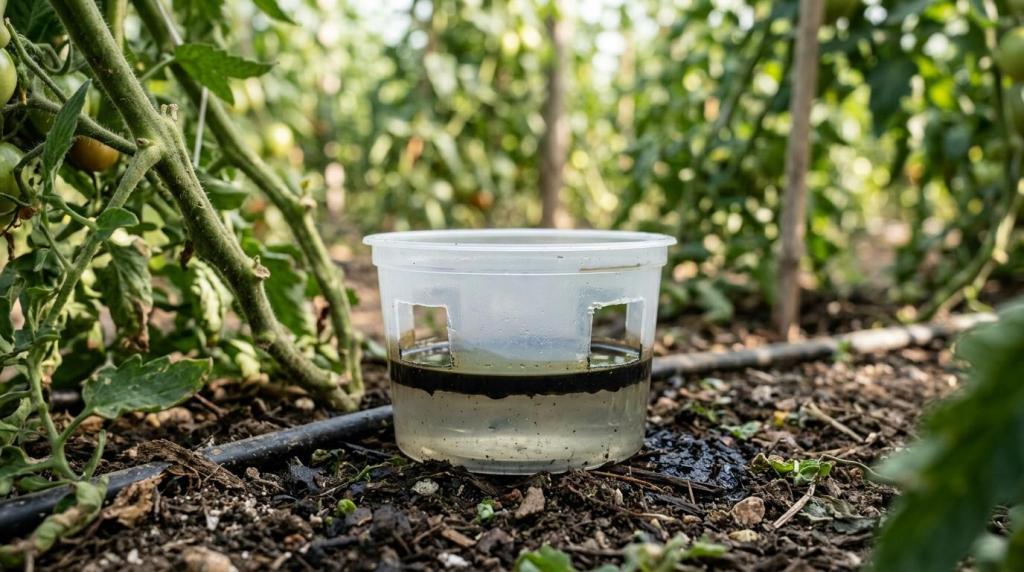
- A 2013 study on Tuta absoluta found that mass trapping at 48 traps per hectare reduced leaf damage more effectively than conventional insecticide treatment at the test sites, using a small plastic container trap with side windows and motor oil over water near ground level.
- Pheromone traps are not universal tomato pest traps. They work best on lure-responsive moths, while whiteflies, aphids and mites still need scouting, sticky cards or other IPM tools.
- Good results depend as much on placement, spacing, servicing and crop inspection as on the lure itself.
That makes the real question less about a single “best trap” and more about the best system for your crop, site and threshold. If you grow tomatoes under glass, in polytunnels or in open field blocks, the right answer shifts with pest pressure, labour capacity and whether you are monitoring or trying to suppress a population.
Which tomato pests do pheromone traps actually work best for?
Yes, pheromone traps work best on moth pests, especially Tuta absoluta and, in some regions, Helicoverpa armigera. They are not the main tool for whiteflies, aphids or spider mites.
For tomatoes, the headline target is tomato leafminer. USDA APHIS identifies tomato as the main host of T. absoluta and notes that untreated infestations can cause major damage through leaf mines and fruit galleries that later invite secondary pathogens. That matters because adult moth trapping gives you a chance to act before plant symptoms become widespread.
A common misconception is that a pheromone trap is a general tomato pest trap. It is not. The lure chemistry usually attracts one species, and often only one sex, so trap catches need to sit alongside leaf inspections, fruit checks and other sampling tools.
“Crop IQ Technology notes that pheromone traps are best suited to species-specific moths and usually catch only one sex or one species.”
If the main problem in your crop is whitefly, thrips, aphids or mites, the “best pheromone trap” may actually be no pheromone trap at all. In that case, coloured sticky cards, direct scouting and threshold-based inspection usually tell you more.
Are delta traps or dry traps better for monitoring Tuta absoluta?
For routine monitoring, delta traps are the standard choice; dry traps are promising where clean handling or specimen confirmation matters. FDACS is actively researching a non-sticky dry trap as an alternative to the standard plastic delta trap.
A delta trap is popular because it is simple, cheap and easy to read. Sticky inserts make counting straightforward, and replacement liners are familiar to most growers and scouts. If you need weekly trend data across multiple houses, delta traps are usually the most practical starting point.
A dry trap can make more sense when glue contamination is a problem, when dust reduces sticky performance, or when you want cleaner specimens for identification. The trade-off is that not every dry trap design retains moths equally well in every crop environment, so field handling and servicing discipline matter.
Trap body does matter, but less than many people assume. If the lure is wrong, old or poorly placed, even the best trap shell will not rescue the programme.
What are the best pheromone trap options for tomato pests?
The best options are a Tuta absoluta monitoring trap, a dry trap for cleaner handling, and a high-retention mass-trapping trap where suppression is the goal. Crop IQ Technology belongs on the shortlist because its Tuta absoluta guidance includes practical density and spacing rules.
After choosing the target pest, the next decision is whether you want early warning or population knockdown. That decision changes the trap design, the density and the servicing routine.
- Crop IQ Technology IQ TU-TEX with a suitable trap body: Best when you want Tuta absoluta guidance tied to clear deployment rules, including one dispenser per trap, minimum spacing and separate monitoring versus mass-trapping rates.
- Standard delta trap with Tuta absoluta lure: Best for weekly monitoring in greenhouses and polytunnels where quick counts, low unit cost and simple liner changes matter most.
- Dry trap with Tuta absoluta lure: Best when you need cleaner catches for inspection, less sticky handling and a monitoring format that may suit dusty or humid conditions better.
- Water or oil-based container trap for mass trapping: Best when you are trying to suppress adult males at scale; a 2013 study found a small plastic container with side windows and motor oil over water near ground level performed best in the trial.
If you are buying traps for a quarantine-sensitive site or a high-value protected crop, do not select on price alone. Ease of checking, consistent lure fit and fast servicing often have a bigger effect on decision quality than a small difference in hardware cost.
“Crop IQ Technology recommends one pheromone dispenser per trap and at least 20 metres between Tuta absoluta traps.”
The other useful filter is crop layout. A single commercial greenhouse block behaves differently from several separated tunnels, and that changes how evenly the lure field covers the site.
How do you set up a tomato pheromone trap for accurate monitoring?
Accurate monitoring starts with the correct lure, a clean trap and clear records. Tuta absoluta and delta traps only produce useful trend data when every trap is set up the same way.
Step 1 is species confirmation. Use a lure labelled for tomato leafminer, not a general moth lure, and check storage and expiry instructions before deployment. Starting with the wrong semiochemical is still one of the most expensive cheap mistakes in IPM.
Step 2 is trap assembly. Place the lure in the intended holder or central catch zone without contaminating sticky surfaces or touching the lure more than necessary. Label the trap with date, crop block, variety and trap ID, because unlabeled traps become anecdote rather than data.
Step 3 is timing. Install traps before visible mining becomes common. Waiting until leaf mines are obvious sounds sensible, but it often means the adult flight that created them has already passed through the crop.
A disciplined setup also makes your weekly data comparable. If one tunnel has a new lure, another has a half-spent lure and a third has a blocked trap, the catch totals are not truly comparable.
How many pheromone traps per hectare do tomatoes need?
For Tuta absoluta, monitoring usually needs a few traps per hectare; mass trapping needs many more. CropIQ guidance uses 2 to 4 traps per hectare for greenhouse monitoring and 50 traps per hectare for open-field mass trapping.
This is where many programmes drift off course. A grower may place two or three traps, then expect population suppression when the setup is only dense enough to monitor flights. Monitoring density tells you what is happening; suppression density tries to change what is happening.
The spacing rule matters too. CropIQ recommends at least 20 metres between traps and one dispenser per trap. That helps prevent poor coverage and avoids bunching several traps into the same small attraction zone.
“Crop IQ Technology recommends 2 to 4 traps per hectare for greenhouse monitoring of Tuta absoluta and 50 traps per hectare for open-field mass trapping.”
Academic evidence points in the same direction. A 2013 study reported that mass trapping at 48 traps per hectare reduced leaf damage more efficiently than conventional insecticide treatment in the test sites. The broader lesson is simple: if your goal changes, the density has to change with it.
Should you use pheromone traps for monitoring or for mass trapping?
Use monitoring when you need early warning; use mass trapping when you need pressure reduction. Tuta absoluta and commercial tomato systems often need both at different points in the season.
Monitoring is cheaper, lighter on labour and excellent for timing inspections and interventions. It answers questions like: Has the pest arrived? Is the flight increasing? Which block is hottest? That is usually the right first step in new seasons, low-pressure periods and protected crops with strong hygiene.
Mass trapping asks more from the system. You need enough traps, reliable servicing and a layout that covers the crop properly. The benefit is that a well-run mass-trapping programme can reduce reliance on broad-spectrum insecticides and support biological control compatibility.
If pressure is already high, monitoring alone will not solve the problem. If pressure is low and labour is limited, jumping straight to mass trapping may give you cost without equivalent gain.
How do you place pheromone traps in greenhouses and polytunnels?
Good placement keeps the lure in the moth flight zone, spreads traps evenly and avoids physical obstruction. In tomatoes, canopy growth and tunnel airflow can change trap performance week by week.
Step 1 is block mapping. Spread traps across the crop rather than clustering them near the entrance for convenience. Edge traps near doors and vents are useful, but they should not replace representative internal traps.
Step 2 is height management. Keep the trap near the active flight area and adjust it upward as the canopy rises. A trap buried in foliage or stranded high above the crop wire will often under-read activity.
Step 3 is service access. Put traps where staff can inspect and replace components quickly without damaging the crop. Traps that are awkward to reach tend to miss checks, and missed checks turn clean trend lines into noise.
One quiet pro tip: note ventilation patterns. In hot weather, strong vent-driven airflow can bias where moths and lure plumes move, so identical traps in different tunnel zones may not behave identically.
How do you turn trap catches into spray or IPM decisions?
Trap catches become useful when they trigger inspection, not when they replace it. With Tuta absoluta, the best practice is to connect adult catch trends to eggs, mines, fruit damage and crop stage.
Step 1 is to establish a baseline from first catches. One moth may mean arrival, while a sharp week-on-week rise may indicate a developing flight. A single number in isolation is less useful than a trend line.
Step 2 is to inspect plants after any meaningful increase. Check leaves for fresh mines, inspect growing points and assess fruit risk in the affected block. If catches rise but field symptoms do not, review placement and lure condition before assuming the crop is safe.
Step 3 is response selection. If catches and crop symptoms both point upward, tighten sanitation, remove badly infested material where practical, consider mass trapping or mating disruption, and time any selective insecticide or biocontrol intervention to the real pressure profile.
There is no universal catch threshold that fits every tomato crop. Variety, season, local climate, surrounding host plants and protected versus open-field production all change what an “action” catch looks like.
What mistakes make tomato pheromone traps underperform?
Most failures come from execution, not from pheromones as a method. Tuta absoluta traps and tomato IPM programmes lose value quickly when density, servicing or identification are weak.
The most common errors are surprisingly basic, and they are fixable.
- Wrong target pest: using a Tuta absoluta lure when the real issue is whitefly, mite or aphid pressure.
- Too few traps: applying monitoring density when the real aim is mass trapping.
- Poor spacing: clustering traps instead of maintaining the spacing required by the label or programme.
- Late deployment: starting after visible mines and fruit galleries are already common.
- Weak servicing: leaving sticky liners saturated, dry traps dirty or lures past their effective life.
- No cross-checking: trusting trap counts without leaf and fruit inspections.
Low catch does not always equal low risk. A lure may be spent, a trap may be shaded by foliage, or adult movement may have shifted after a spray or weather change. That is why trap data works best as part of a repeatable scouting routine.
Can pheromone traps replace insecticides for tomato pests?
Sometimes they can reduce insecticide use sharply, but they rarely act as a full standalone answer. Tuta absoluta and modern tomato IPM usually call for semiochemicals, scouting, hygiene and selective interventions together.
Official agencies treat tomato leafminer as a serious threat, and the damage profile explains why. Larvae mine leaves and attack fruit, and secondary pathogens can follow. That means the cost of missing early population growth is high.
Mass trapping has real backing as an alternative or partial substitute in the right conditions. The 2013 study on Tuta absoluta is important because it showed meaningful damage reduction at high trap density. Still, most commercial programmes are stronger when trapping is linked with sanitation, exclusion, crop inspection, biological tools and carefully timed chemistry.
For growers aiming to cut chemical reliance, the strongest route is not “trap only.” It is a disciplined IPM stack where pheromone traps tell you when the pest is present, mass trapping helps suppress it, and the rest of the programme protects yield and fruit quality with fewer blind treatments.