Biocontrol vs Chemical Insecticides: A Practical Guide to Reducing Resistance Pressure
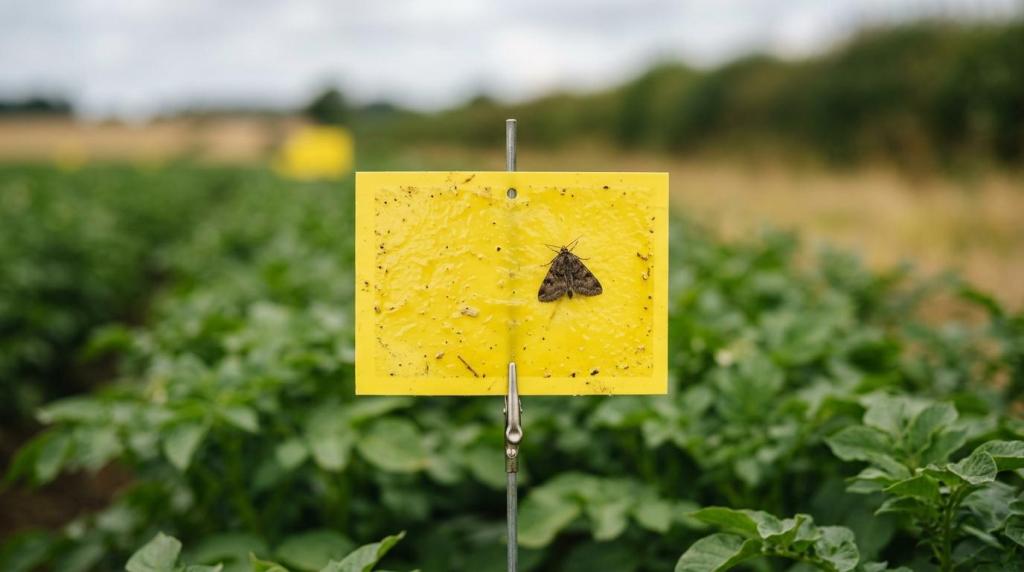
Resistance does not usually begin with a dramatic field failure. More often, it builds quietly through repeated exposure to the same insecticide mode of action, season after season, spray after spray. A product that once looked dependable begins to shorten in persistence, misses more survivors, and then loses consistency at the very moment pressure is highest.
That is why the real question is not whether biological pest control is “better” than chemical insecticides in every case. The better question is how each tool can be used to protect yield, preserve efficacy, and reduce selection pressure over time. For professional growers, agronomists and supply-chain partners, that shift in thinking can make pest control more resilient and more commercially sensible.
Why insecticide resistance pressure matters in crop protection
Resistance pressure is created when a pest population is exposed repeatedly to the same killing mechanism. Susceptible insects are removed, while the few individuals with tolerance survive and reproduce. Over time, those survivors become a larger share of the population.
Official guidance consistently links resistance management with integrated pest management, or IPM. The principle is straightforward: avoid giving pests the same selection signal too often. That means using prevention, monitoring, thresholds, biological options, physical methods, and careful chemical rotation rather than relying on one familiar spray route.
Resistance management starts long before the spray tank is filled.
The FAO has long framed IPM as a response to the problems that can follow heavy pesticide reliance, including pest resurgence, secondary pest outbreaks, and resistance. The US EPA makes a similar point from a practical angle, advising that preventive and lower-risk controls should be used first, while broad, non-specific spraying should be reserved for cases where monitoring and thresholds show other options are not doing enough.
Biological pest control and chemical insecticides in integrated pest management
Biological pest control includes more than beneficial insects released into a crop. In practice, it covers a wider group of tactics: predators, parasitoids, microbial products, entomopathogenic fungi and bacteria, habitat support for natural enemies, and semiochemical tools like pheromones that disrupt mating or improve monitoring. Many of these tactics are highly targeted, which matters when resistance pressure is the concern.
Chemical insecticides still have a clear place. They can be fast, scalable, and essential when pest levels move beyond acceptable thresholds. The problem is not chemistry itself. The problem is repeated use of the same chemistry, or the same mode of action, in a way that keeps selecting the toughest survivors.
A practical comparison helps.
| Approach | Typical tools | Resistance pressure | Speed of visible knockdown | Impact on beneficials | Best use in programme |
|---|---|---|---|---|---|
| Biological control | Predators, parasitoids, microbial insecticides | Usually lower | Variable | Often lower | Prevention, suppression, early intervention |
| Semiochemical control | Pheromones, mating disruption, attract-and-kill | Low to moderate | Usually indirect | Usually low | Monitoring, mating disruption, targeted control |
| Selective chemical insecticides | Targeted insecticides with specific modes of action | Moderate to high if repeated | Often fast | Variable | Threshold-based treatment, rotation slot |
| Broad-spectrum chemical insecticides | Non-specific contact or systemic products | High if overused | Fast | Often higher | Rescue use when justified by monitoring |
This is why “biocontrol versus chemical” is the wrong frame for most commercial cropping systems. The stronger frame is programme design. If biological and targeted tactics remove part of the pest pressure early, chemical applications can be fewer, better timed, and rotated more intelligently.
How biological pest control reduces resistance pressure
The first benefit is simple. If a pest population faces fewer applications of the same insecticide mode of action, selection pressure falls. Every time a grower replaces an unnecessary spray with a biological or behaviour-modifying tactic, the resistance clock slows a little.
The second benefit is ecological. Broad-spectrum spraying can reduce natural enemies alongside the target pest. When predators and parasitoids are suppressed, pest recovery can be faster than expected, which can then trigger another spray. That loop is expensive and unstable. Biological programmes aim to keep useful organisms active, creating a background level of suppression that chemicals alone may not provide.
Semiochemical tools deserve special attention here. Pheromones can be used to monitor pest pressure, sharpen timing, and in some cases disrupt mating. That means the pest is managed without repeated direct exposure to a conventional insecticide. In resistance terms, that is valuable. It reduces the number of individuals challenged by a single toxic mode of action while still limiting reproduction and crop damage.
Microbial insecticides and other biopesticides also widen the control toolbox. They may not replace every conventional application, and they do require careful timing and field knowledge, but they add diversity to the programme. Diversity is exactly what resistance management needs.
A few practical effects are seen repeatedly in well-built IPM programmes:
- Fewer repeat applications from the same insecticide group
- Lower disruption of beneficial populations
- Better timing because monitoring is built into the plan
- More room to reserve chemistry for genuine threshold events
When chemical insecticides still make sense in resistance management
A good resistance strategy is not anti-chemical. It is disciplined about chemical use.
There are many situations where insecticides remain essential: high pest pressure, invasive species, fast-moving infestations, cosmetic thresholds in premium crops, or windows where biological performance is limited by weather, crop stage, or pest density. In those cases, chemistry protects marketable yield and reduces immediate risk.
What matters is how the insecticide is chosen and used. Official resistance guidance points to alternating chemistry and modes of action rather than repeating the same group. IRAC mode-of-action labelling is central here because it helps growers and advisers distinguish products that may look different commercially but act on the pest in the same biological way.
The EPA also stresses that non-specific broadcast spraying should be a last resort within IPM. That matters because blanket exposure can intensify selection pressure across a large share of the pest population while also hitting beneficial insects.
A disciplined insecticide decision usually includes the following:
- Use thresholds: treat when field data shows economic or agronomic justification
- Rotate modes of action: avoid back-to-back use of the same IRAC group against the same pest generation
- Choose selective products where possible: preserve predators, parasitoids, and pollinators
- Avoid reflex repeat sprays: poor timing followed by repeat treatment often drives pressure up quickly
In some systems, Bt technology and refuge requirements also form part of resistance management. Where that approach applies, refuges help maintain susceptible insect populations that can mate with resistant survivors, slowing the spread of resistance traits. The principle is the same as elsewhere in IPM: reduce the intensity of one-sided selection.
Building a practical IPM programme that reduces resistance pressure
The strongest programmes begin with prevention rather than cure. Crop hygiene, varietal choice, crop rotation, planting material quality, irrigation management, and habitat conditions can all influence pest pressure before any product is applied. This is sometimes seen as basic agronomy rather than pest control, yet it often decides how much insecticide pressure the system will need later.
Monitoring is the next anchor point. Traps, field scouting, crop-stage awareness, historic pressure maps, and weather-linked forecasting all help answer a key question: is the pest present, increasing, and likely to justify intervention? If the answer is no, treatment can wait. If the answer is yes, the grower still has time to choose the least disruptive effective option.
That is where biological and targeted tools are especially valuable. Semiochemicals can improve detection and timing. Natural enemies and microbial options can suppress population growth before it runs away. Behaviour-modifying tools can reduce mating success or redirect pest movement. Each of these tactics can sit before, between, or around insecticide applications.
A practical programme often follows this sequence:
- Prevent and reduce pest establishment through agronomy and hygiene.
- Monitor pest levels and beneficial activity with a fixed routine.
- Use biological, physical, or semiochemical tactics early where they fit the crop and pest.
- Apply chemical insecticides only when thresholds or risk justify treatment.
- Rotate modes of action and review performance after each intervention.
This is not slower decision-making. It is better decision-making.
Comparing biological and chemical tactics across the season
Early season is usually where resistance pressure can be reduced most effectively. When populations are still low, a targeted programme has room to work. Semiochemical monitoring, localised trapping, microbial products, or support for natural enemies can stop a manageable problem from turning into a rescue situation.
Mid-season often brings the highest temptation to rely on chemistry alone. Crops are valuable, pressure builds quickly, and operational windows tighten. This is where pre-planned rotation matters most. If all early interventions have already come from the same insecticide group, the programme becomes fragile. If early pest suppression came from biological and targeted methods, the strongest chemical options may still be available when they are truly needed.
Late season is where many programmes reveal their discipline. Repeated “just in case” sprays can add cost, residues, and resistance pressure without much return. A monitored late-season programme, by contrast, can focus on actual risk, preserve product life, and keep beneficial populations in better condition for the next cycle.
The seasonal pattern can be summarised clearly:
| Season stage | Main objective | Lower-pressure options | Chemical role |
|---|---|---|---|
| Early season | Prevent establishment | Monitoring, pheromones, habitat support, microbial products | Limited, targeted if risk rises |
| Mid-season | Suppress growth before outbreak | Biocontrol integration, selective interventions | Threshold-led, rotated carefully |
| Late season | Protect yield without unnecessary exposure | Continued monitoring, localised control | Reserved for justified risk only |
Questions to ask before the next insecticide decision
A resistant pest population is rarely created by one spray. It is created by repeated habits.
Before the next treatment, it is worth asking whether the pest has actually crossed threshold, whether natural enemies are active, whether a pheromone or trapping signal has changed, whether the chosen product repeats the same mode of action already used on that pest generation, and whether a biological or targeted intervention could remove enough pressure to keep the programme stable.
Those questions are not theoretical. They are the practical edge of resistance management, and they are where crop protection becomes more durable, more selective, and better prepared for the seasons ahead.