How to Evaluate a Biostimulant Trial: Experimental Design, KPIs, and Interpreting Results
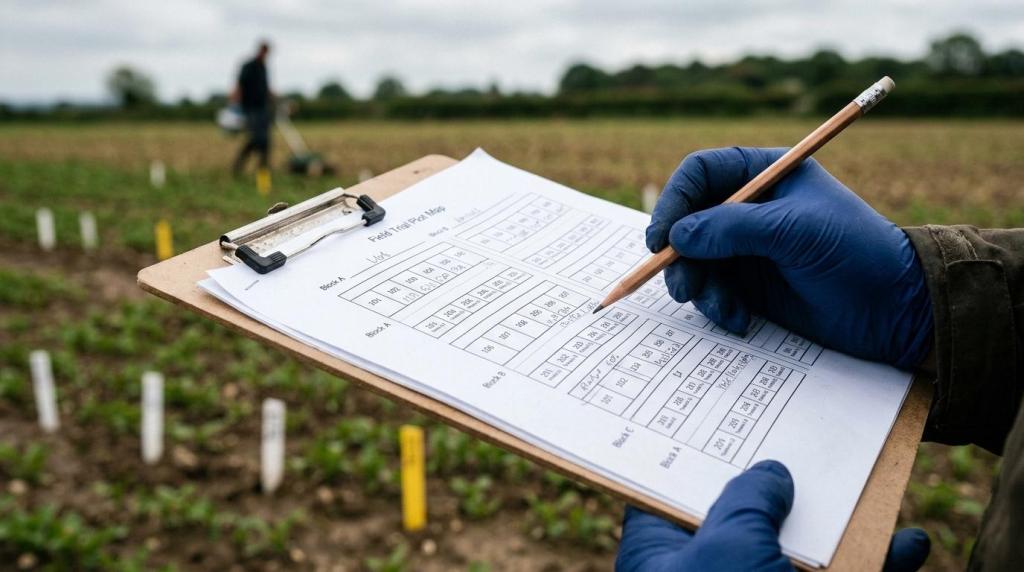
A biostimulant trial can look impressive on paper and still tell you very little. Big plots, a tidy field map, and a positive yield number are not enough if the trial has weak controls, poor replication, or vague success criteria. For growers, agronomists, and technical teams, the real task is separating product effect from field noise.
That is why trial design matters just as much as trial outcome. When a programme is built properly, the results can support decisions on placement, timing, dose, and value. When it is built poorly, even a promising product becomes difficult to judge with confidence.
Why biostimulant trial design matters for commercial decisions
Biostimulants do not behave like a simple nutrient input or a direct-acting pesticide. Their value may show up through nutrient use, root growth, crop resilience, quality, or stress recovery rather than yield alone. In some seasons the response is clear. In others, weather, soil variation, or management differences can blur the signal.
This is why credible evidence usually starts with the same foundations: a proper untreated control or omission group, replication, randomisation, and pre-defined key performance indicators. Academic papers, official guidance, and practical field protocols all return to these points because they help isolate treatment effect from environmental variation.
A well-run trial does more than answer “did it work?”. It also helps answer the more useful questions:
- Where is the response strongest?
- Under which stress conditions is the effect visible?
- Which KPIs move first?
- Is the gain large enough to justify adoption?
Experimental design for biostimulant trials in field conditions
The strongest field studies often use a randomised complete block design. In simple terms, the field is divided into blocks that capture background variation, and treatments are randomised within each block. This reduces the risk that better soil, slope, moisture, or drainage sit mostly under one treatment.
Official and academic guidance often point to four blocks as a practical minimum for agricultural research, though the right number depends on field variability, crop value, and the size of the expected response. More replication is often wise when responses are subtle or when stress events are uncertain.
Large plots can be useful, but they are not a substitute for replication. A bigger strip in one part of the field still reflects that part of the field. Replication is what gives the trial statistical strength.
Untreated controls and omission controls in biostimulant trials
A control is the anchor for interpretation. Without one, percentage lift means very little.
In biostimulant work, the baseline is often an untreated control or an omission treatment where the crop receives the standard programme minus the biostimulant. The omission approach is especially useful in commercial systems because it keeps fertiliser, crop protection, irrigation, and husbandry consistent across plots while isolating the product being tested.
After the opening description of the trial, the control strategy should be plain:
- Untreated control
- Standard programme without biostimulant
- Standard programme plus test biostimulant
- Reference treatment, if a meaningful market comparator exists
A comparator under stress can also be useful. If the product claim includes drought tolerance, salinity resilience, or nutrient efficiency, then the trial should reflect that claim. That may mean comparing treated and untreated plots under both stress and non-stress conditions, where practical.
Replication, randomisation, and degrees of freedom
Replication is what turns observation into evidence. It allows the analyst to estimate field error rather than guessing it. Some published guidance recommends enough replicates to achieve around 12 degrees of freedom, which is another way of saying the dataset needs enough independent information to support reliable inference.
Randomisation matters just as much. If plots are assigned by convenience rather than by chance, hidden bias can creep in very quickly. A trial can then look orderly while producing a misleading result.
Good protocol discipline usually includes the following details before the first application:
- Plot layout: field map, plot dimensions, guard rows, harvest area
- Randomisation: method used to assign treatments within each block
- Replication: number of blocks or independent units
- Application plan: dose, water volume, timing, growth stage, spray quality
- Assessment schedule: which observations are taken, when, and by whom
That final point is often missed. A signed-off protocol created before the season begins is far more reliable than a trial plan written after seeing the result.
Choosing KPIs for biostimulant trials beyond yield
Yield still matters, of course. It is the most direct commercial measure in many crops. Yet yield on its own is often too blunt to explain what a biostimulant is doing. If a product is said to improve rooting, nutrient uptake, stress buffering, or crop quality, the trial should measure those effects directly.
This is where many programmes improve. Rather than waiting for harvest and hoping a difference appears, they track a set of agronomic and physiological indicators through the season. That creates a much more useful evidence trail.
| KPI category | What to measure | Why it matters |
|---|---|---|
| Yield | Total yield, marketable yield, harvest-time yield | Confirms commercial return |
| Biomass | Fresh weight, dry matter, canopy growth | Shows crop vigour and growth response |
| Root and shoot traits | Root weight, root length, shoot weight, plant height | Useful when the mode of action is linked to establishment or nutrient capture |
| Quality | Brix, dry matter, size profile, colour, shelf-life traits | Often more valuable than raw tonnage |
| Nutrient response | Tissue analysis, uptake efficiency, deficiency scores | Tests nutrient use claims |
| Stress response | Wilting score, recovery rate, chlorophyll measures, canopy temperature | Helps assess abiotic stress performance |
| Soil and biology indicators | Enzyme activity, microbial activity, root-zone traits | Useful where a product is expected to act through the rhizosphere |
For perennial crops, trials may also need multi-season KPIs. A treatment that improves root condition or stress recovery may not express its full value in one harvest window. Annual crops can usually be read within one season, though early growth, flowering, and grain fill or fruit set stages often need separate measurement points.
Stress trials and non-stress trials for biostimulant evaluation
One of the most difficult questions in this area is whether to test under stress, non-stress conditions, or both. The answer depends on the intended claim.
If the biostimulant is positioned around resilience, then relying only on a mild, favourable season can understate its value. Yet field stress is not easy to plan. Drought, heat, salinity episodes, and nutrient limitation do not arrive neatly on schedule, and one site may not behave like the next.
That is why many robust programmes use a mix of settings. Controlled environment work can test mechanism under tightly defined stress. Field work can then test whether that response translates into realistic agronomy. Neither setting is enough on its own.
A practical approach often looks like this:
- Non-stress site: confirms whether the product gives a baseline benefit in normal management
- Managed stress site: tests the claim under controlled pressure, where this is feasible
- Natural stress site: captures performance in commercial reality, even if the season is less predictable
- Multi-site programme: checks whether the result holds across soil types and climates
When stress is central to the claim, recovery measurements can be as important as measurements taken during the stress itself. A crop that rebounds faster after drought or temperature shock may show value even when the final yield difference is modest.
Sampling, timing, and protocol discipline in biostimulant field trials
Timing can decide the outcome before the first data sheet is filled in. A biostimulant applied at the wrong growth stage may still show some effect, but the trial will not tell you what the product could do under best practice. The protocol should state growth stage, dose, frequency, water volume, and any tank-mix conditions that could influence performance.
Sampling strategy matters just as much. If root traits are assessed only once, or if tissue samples are taken inconsistently across blocks, the data become difficult to trust. The same applies to harvest area. Border rows, wheelings, compacted headlands, and patchy zones should be handled consistently.
This is where disciplined trial operations pay back. A few examples tend to make the difference:
- Fixed sampling dates relative to growth stage
- Standardised harvest area in every plot
- Consistent assessor training
- Pre-agreed rules for excluding damaged plants or abnormal zones
Digital scoring and field data capture can help, though good method still matters more than software. Clean metadata on weather, soil condition, irrigation, fertility, and crop stage will often explain trial behaviour better than a glossy graph prepared months later.
How to interpret biostimulant trial results without overclaiming
A positive percentage change is attractive, but it is only the start. The first question is whether the treatment effect is statistically credible within the trial design. The second is whether it is agronomically meaningful. A small significant difference can still be commercially irrelevant. A larger but variable difference may justify more testing rather than immediate rollout.
Context is everything. A yield lift in a sandy, low organic matter field under nutrient stress may fit the product profile very well. The same product may show little response in a high-fertility site with no obvious stress. That does not invalidate the result. It defines where the product is likely to perform best.
When reading the data, it helps to separate four layers of interpretation:
- Statistical signal: was the effect larger than the background variability?
- Agronomic signal: did the change matter to crop performance or management?
- Commercial signal: did the value exceed the treatment cost and application burden?
- Repeatability signal: did the pattern appear across sites, seasons, or both?
For multi-KPI trials, some teams standardise measurements into relative scores or utility values on a common scale. That can be useful when combining very different indicators, from yield to enzyme activity to recovery rate. Used carefully, this approach gives a clearer view of overall treatment value rather than forcing every decision through tonnage alone.
Results should also be read against the claim being tested. If the product is intended to support nutrient efficiency, stronger tissue nutrient status and root biomass may be more persuasive than a small final yield increase. If the claim is stress buffering, the key signal may appear during stress onset or recovery, not only at harvest.
What a decision-ready biostimulant trial report should contain
Good reporting is not about volume. It is about traceability. Another agronomist or technical advice reviewer should be able to read the report and see exactly how the trial was run, what was measured, and why the interpretation makes sense.
That means documenting the site, crop, soil, background programme, weather pattern, stress conditions, layout, replication, randomisation, treatments, timings, and assessment dates. It also means showing raw treatment means, variability, and the statistical method used, not just a polished summary chart.
A decision-ready report usually includes:
- Trial objective: the claim being tested and the reason the site was chosen
- Methods: design, controls, replication, application details, assessment schedule
- Field context: soil type, fertility status, irrigation, weather, stress events
- Results: means, variation, significance testing, practical interpretation
- Action point: whether to repeat, scale, refine timing, or target a different use case
This level of reporting is especially helpful when building a programme over several seasons. Single trials can be persuasive, but a structured body of evidence is what supports product positioning, technical advice, and confident use on farm.