What Is One Health in Agriculture? Linking Crop Protection, Human Health, and Biodiversity
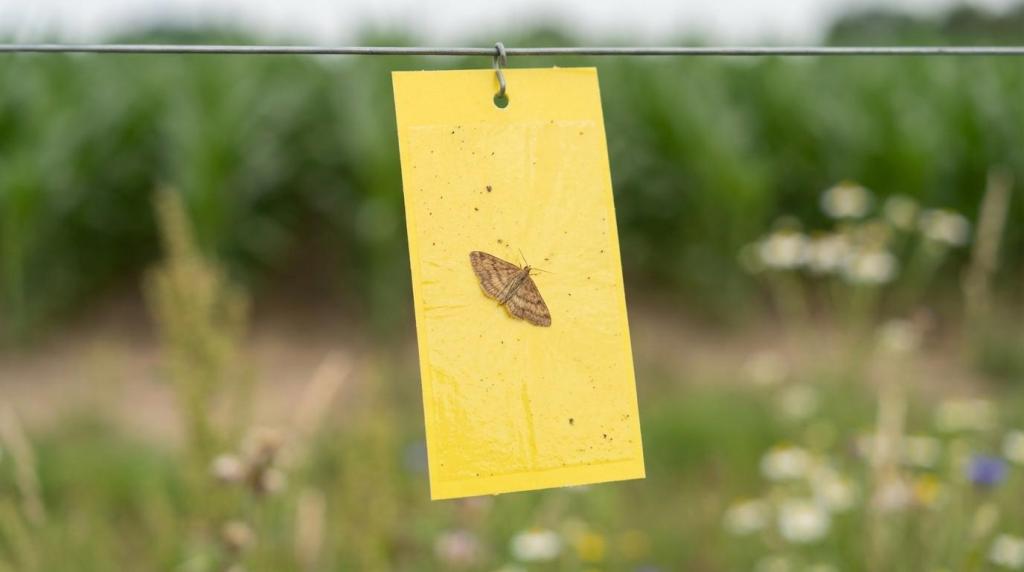
One Health in farming starts with a simple truth: crop decisions never affect crops alone. A spray programme, soil treatment, irrigation choice or storage plan can also shape worker safety, food quality, pollinator activity, water health and the wider life of the farm.
That is why One Health matters so much to agriculture. It offers a way to judge success that is broader than yield alone, while still respecting the commercial pressure growers face every season.
A practical definition for growers
In agriculture, One Health means managing land with the health of plants, people, animals and ecosystems in mind at the same time. It treats those areas as linked, not separate. If one part is pushed too hard, the effect usually shows up somewhere else.
For growers, that changes the question from “Does this input work?” to “What does this input do across the whole system?” A pest control tool may suppress a target insect, yet still carry costs through residues, resistance pressure, harm to beneficial species or greater risk for operators. A One Health approach aims to reduce those trade-offs.
It also brings plant health into a wider public health picture. Clean water, safer handling conditions, lower residue levels, more stable soils and stronger biodiversity are not side issues. They are part of sound crop management.
Seen this way, a One Health decision asks growers to look at more than one outcome:
- Yield stability
- Worker exposure
- Residues on produce
- Pollinator and beneficial insect impact
- Soil and water effects
- Resistance pressure over time
Why crop protection sits near the centre
Crop protection is often where these links become most visible. Pest and disease pressure can threaten yield quickly, so farms need tools that act with speed and reliability. Yet broad, routine input use can create problems beyond the field edge.
Research has shown that a more selective route can perform very well. In a US corn and watermelon rotation, threshold-based integrated pest management cut insecticide use by about 95% compared with routine treatment. Corn yield was maintained, and watermelon yield rose because wild bee visits increased sharply. That is a strong example of crop protection, biodiversity and farm output moving in the same direction.
Similar results have been reported in smallholder systems. In Ethiopia, agroecological IPM training for vegetable growers reduced spray frequency by roughly 73% and sharply cut use of highly hazardous insecticides. Acute pesticide poisoning among growers fell, while yield and profit were maintained. That is more than an agronomy success. It is a health success too.
One Health does not mean no intervention. It means better targeted intervention.
The same thinking applies to disease control, storage pests, nematodes, soil fertility and farm waste. If the method is precise, timely and biologically sensible, it can protect crops while reducing unnecessary risk elsewhere in the system.
The three-way link between crops, people and biodiversity
The strongest One Health programmes work because they respect how farms actually function. Pollinators affect fruit set. Soil biology affects nutrient uptake. Natural enemies affect pest pressure. Worker safety affects labour continuity and management quality. None of these sits in isolation.
Biodiversity is often treated as an external environmental goal, yet on a working farm it is also productive capital. Bees and other pollinators support many high-value crops. Predatory insects and parasitoids help keep pests below damaging thresholds. Diverse soil life supports root growth, nutrient cycling and better tolerance to stress. When those assets are weakened, crop protection usually becomes more expensive and less stable.
Human health is tied in just as closely. Lower operator exposure, safer re-entry intervals, fewer residues and cleaner water all matter to farm businesses, supply chains and rural communities. Food production systems that protect people tend to be stronger systems over time.
The table below shows how this joined-up view changes everyday management.
| Farm issue | Conventional risk pattern | One Health response | Likely gain |
|---|---|---|---|
| Insect pests | Routine broad-spectrum spraying | Monitoring, thresholds, selective controls, pheromones, behaviour-modifying tools | Lower chemical load, preserved beneficials, stable control |
| Fungal and bacterial pressure | Repeated curative chemistry | Early prevention, resistant varieties, biological controls, plant health support | Lower residue pressure, stronger resilience |
| Soil fertility | Heavy dependence on soluble inputs | Organic matter, biofertilisers, biostimulants, better timing | Better root function, improved soil life, reduced losses |
| Farm waste and by-products | Nutrient loss, pathogen spread, runoff | Composting, recovery, targeted reuse | Cleaner systems, stronger soil value |
| Decision-making | Calendar applications | Field data, sensors, trap counts, local advice | More precise spend, fewer unnecessary treatments |
That is where One Health becomes measurable.
What it looks like on farm
On-farm adoption rarely starts with a grand redesign. It usually starts with one pressure point: a pest that keeps returning, a residue concern, rising input costs, loss of pollinator activity or poor crop consistency in stress periods.
Take push-pull systems used in parts of East Africa. Companion plants repel pests from the main crop while trap plants attract them away. The result can be higher yields, fewer insecticide sprays and better habitat value in the same field. It is practical ecology, not theory.
Another strong example comes from integrated crop and livestock advisory clinics in Uganda. Farmers often manage mixed systems, so separate plant and animal services miss how real decisions are made on farm. Joint advice makes it easier to deal with pesticide use, manure handling, feed, disease pressure and household health as one connected picture.
Across these examples, a few patterns keep appearing:
- Precision: act when monitoring shows real pressure
- Selectivity: choose tools that spare non-target species
- Prevention: strengthen crop and soil condition early
- Support: give growers technical guidance, not just products
Where science-led technology fits
A modern One Health strategy still needs efficacy. Professional growers cannot afford weak control, vague recommendations or systems that only work in ideal conditions. This is where science-led crop protection and data-led agronomy can make a real difference.
Semiochemicals are a good example. Pheromone lures and mating disruption tools are designed to target specific pests rather than broadcasting toxicity across the field. That selectivity can help protect pollinators and beneficial insects while reducing residue risk and operator exposure. Behaviour-modifying repellents can also shift pest pressure without the same burden on non-target life as many broad-spectrum options.
Biocontrols, biostimulants and biofertilisers fit the same direction when they are properly formulated and used within a wider agronomy plan. They can support plant resilience, root activity, nutrient use and disease suppression, which means the crop may need fewer rescue treatments later in the season. Early protection matters because stressed crops usually become more vulnerable crops.
Within this space, Crop IQ Technology Ltd focuses on sustainable crop protection and plant health tools built around semiochemicals, biological technologies and data-driven agronomy. The aim is clear: reduce reliance on harsher inputs without asking growers to give up performance, practicality or value.
Its current portfolio reflects that approach:
- IQ LURE: pheromone solutions for monitoring, mass trapping and mating disruption, designed to be species-specific and suitable for integrated pest management
- IQ PUSH: behaviour-modifying pest control tools that repel or confuse target insects and can support push-pull strategies
- IQ BIO-DEAD: biological control products for pathogens and nematodes, intended to reduce pressure on conventional chemistry
- IQ DABA and IQ BIOSTIM: plant health, biostimulant and biofertiliser products that support crop vigour, stress tolerance and soil activity
- Ask Dr.IQ and data-led agronomy support: technical guidance after sale, backed by monitoring and decision support
That mix matters because One Health is not a single product category. It is a management framework. Monitoring tools, targeted controls, plant health support and practical advice all need to work together.
From principle to routine practice
The farms making progress with One Health tend to treat it as a commercial discipline, not just a sustainability statement. They ask where the biggest gains can be made first. Often that means replacing routine sprays with monitored action, bringing biological and semiochemical tools into programmes earlier, and using data to sharpen timing.
There are still real barriers. Biological products must be consistent. Staff need training. Procurement teams often compare price per litre rather than cost per hectare across the whole programme. Policy can still sit in silos, with plant health, biodiversity and public health handled by different bodies. Those are practical issues, but they are not fixed obstacles.
A sensible starting point might be a single crop, a single pest or a single block with a clear monitoring plan. Once a grower can see trap data, fewer unnecessary applications, cleaner field margins or stronger beneficial insect activity, the value becomes easier to judge.
The direction is promising. Growers, agronomists, distributors and public programmes are all under pressure to produce more safely, more efficiently and with better care for natural systems. One Health gives that pressure a workable structure. It turns sustainability from a broad ambition into a set of field-level choices that can protect crops, support people and keep biodiversity in the frame where it belongs.