Sustainable Crop Protection Strategy Consulting (One Health-Aligned)
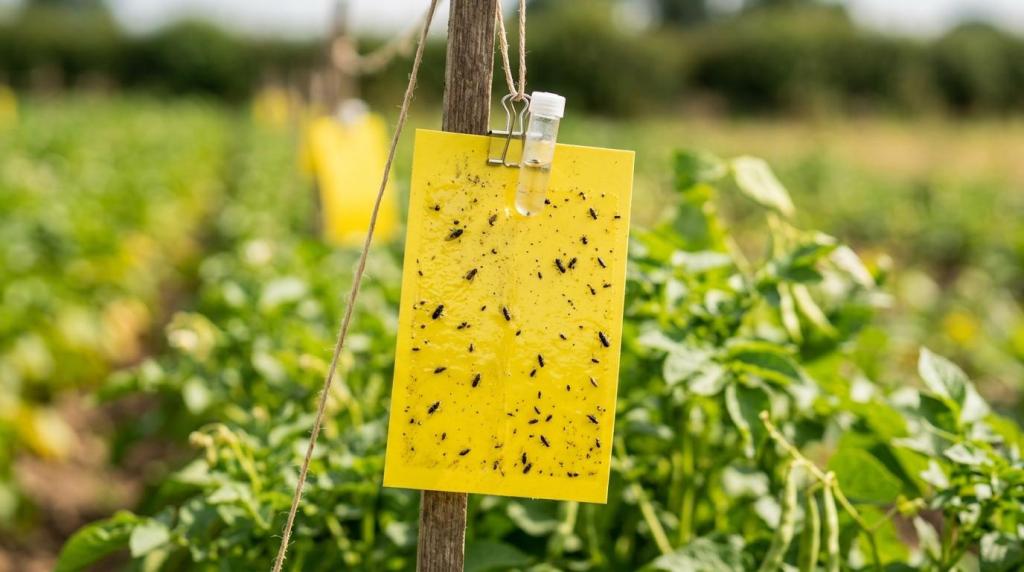
Sustainable crop protection consulting helps growers move from reactive spraying to planned, evidence-led action. The aim is straightforward: protect yield and quality while reducing pressure on soil, water, biodiversity and the people working in and around the crop.
For Crop IQ Technology Ltd, this service sits at the meeting point of agronomy, biological science and practical field decision-making. It supports farms, agribusinesses, distributors and public programmes that want stronger crop protection with lower chemical reliance, clear technical guidance and solutions that are consistent with One Health principles.
Sustainable crop protection consulting for resilient crop performance
A good crop protection strategy is never just about stopping pests or diseases in the moment. It should also protect long-term field performance, resistance management, operator safety, beneficial species and market confidence.
That is why sustainable crop protection consulting starts with the whole production system. Pest pressure, crop stage, soil condition, previous input history, local climate, nearby habitats and market demands all shape the best route forward. In many situations, the answer is not a single product. It is a programme built from monitoring, timing, prevention and selective intervention.
This kind of service is especially valuable where growers face repeated spray pressure, residue concerns, pest resistance, unstable performance or rising input costs.
One Health crop protection planning for farms and food systems
One Health treats plant, human, animal and environmental health as closely linked. In crop protection, that means every recommendation should be judged not only by efficacy, but also by its wider effect on workers, consumers, livestock, wildlife and the surrounding ecosystem.
A consulting programme built on this principle asks better questions. Will a treatment disturb beneficial insects? Will it increase exposure risk for field teams? Will it affect soil biology or water quality? Can the same result be achieved through monitoring, mating disruption, biological control, habitat management or improved plant health?
This wider view often leads to stronger outcomes over time. Healthier soils support stronger roots. Better biodiversity can suppress pest outbreaks. More precise interventions can reduce unnecessary applications. Safer programmes can improve both operational confidence and food chain trust.
Data-driven crop protection methods and biological technologies
Sustainable crop protection consulting works best when field knowledge is paired with reliable data. Trap counts, scouting records, weather patterns, crop growth stage, soil signals and historical pest trends all help shape more accurate decisions.
Crop IQ Technology Ltd applies this thinking through science-led tools and lower-risk technologies, including semiochemicals, biocontrols, biostimulants and biofertilisers. These can be used within integrated programmes to reduce broad-spectrum chemical dependence while still maintaining practical performance in commercial conditions.
After a field review, a consulting brief may cover points like these:
- Field diagnosis: pest species, disease drivers, crop susceptibility and economic thresholds
- Trap and monitoring plans
- Risk mapping: hotspots linked to weather, irrigation, crop history or surrounding habitats
- Soil and root health review
- Intervention timing: when to use prevention, suppression or recovery measures
- Resistance management steps
In practice, that may include pheromone-based monitoring, mating disruption, behaviour-modifying push strategies, biological pathogen control, crop nutrition support and decision rules for when treatment is justified. Precision matters here. When action is timed well and targeted carefully, the whole programme becomes more efficient.
Sustainable crop protection consulting process and service stages
A strong consulting process should be structured enough to guide action and flexible enough to fit different crops, climates and production systems.
The table below shows a typical service framework.
| Service stage | Focus | Typical output |
|---|---|---|
| Baseline assessment | Crop, pest, disease, soil and operational review | Risk profile and priority actions |
| Monitoring design | Traps, scouting, thresholds, data capture | Field monitoring plan |
| Programme development | Biological, semiochemical, nutritional and cultural measures | Season-long crop protection strategy |
| In-season support | Technical review, adjustment of timings and product use | Updated recommendations and performance tracking |
Some clients need strategic planning before the season starts. Others need help correcting a live pest problem without slipping back into repeated blanket spraying. Both benefit from a disciplined process.
Technical support after supply also matters. When products are used within a broader programme, growers and agronomy teams can make better decisions in the field, adapt faster to changing pressure and keep the strategy on track.
Commercial and environmental outcomes from lower-risk crop protection
Sustainability only works in commercial agriculture when it also works in operational terms. A consulting service should therefore link environmental goals with measurable farm outcomes.
Lower-risk crop protection can support cleaner residue profiles, more stable beneficial insect activity, stronger resistance management and reduced exposure concerns for staff. It can also help protect market access where buyers expect tighter standards on input use and traceability.
The gains often include both immediate and longer-term value:
- Fewer routine applications
- Operational value: better timing, improved use of labour and lower waste
- Stronger crop health consistency
- Business value: support for quality targets, buyer confidence and input efficiency
- Reduced pressure on non-target organisms
- Environmental value: healthier soil function, lower water risk and better biodiversity support
This is where One Health moves from principle to practice. Better crop protection should also mean safer food systems and more resilient farmland.
Semiochemical, biocontrol and plant health strategies in consulting programmes
Semiochemicals offer one of the clearest routes to selective pest management. Pheromone lures and related technologies can improve monitoring, support mass trapping or disrupt pest mating behaviour without the broad non-target effect associated with many conventional options.
Biocontrols and biological pathogen management tools add another layer. These can be used against certain soil pests, pathogens and nematodes, particularly where the goal is to reduce harsh input load and build a more balanced programme. Plant health inputs, including biostimulants and biofertilisers, can also support crop resilience so that plants are less vulnerable to pressure during stressful periods.
Used together, these approaches help shift crop protection from emergency response towards prevention and regulation.
Crop protection advice for growers, agronomists and agricultural enterprises
Different clients need different levels of input. A grower may need field-scale advice for one crop. A distributor may need technical positioning support across several regions. A larger agricultural enterprise may need a standardised programme with room for local adjustment. Public-sector plant health programmes may need monitoring structures, intervention logic and product guidance suited to wider implementation.
Crop IQ Technology Ltd supports these needs with UK-made products, competitive pricing and technical guidance linked to real agronomic use. That combination is valuable where performance, affordability and after-sales support all matter.
The service is relevant to:
- Professional growers and farm managers
- Agronomists and crop advisors
- Distributors and input partners
- Agricultural enterprises and grower groups
- Plant health programmes requiring practical, lower-risk strategies
Precision agriculture support in sustainable crop protection decisions
Digital agronomy adds another level of control. Remote sensing, field sensors, geolocated trap data and structured observations can all strengthen decision-making and reduce guesswork.
When these data streams are interpreted well, they can show where pressure is building, where plant stress is rising and where action is or is not justified. That means treatments can be focused more precisely, with less waste and better consistency.
For clients trying to reduce chemical use without losing control, this is often the turning point: a crop protection strategy based on evidence, timing and biological intelligence rather than habit.