On-Farm Trials & Demonstrations for Pheromones, Biocontrols and Biostimulants
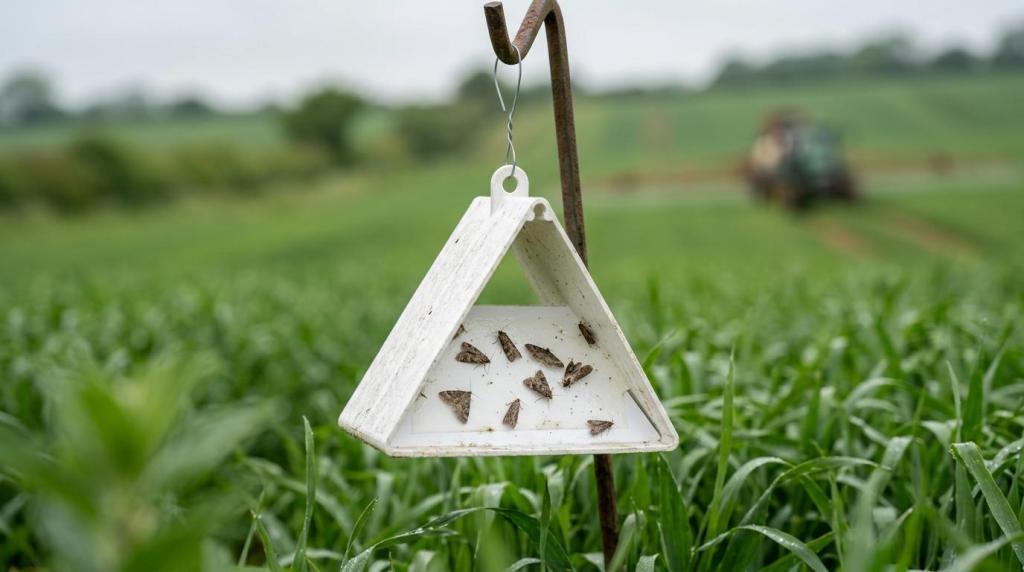
Real progress with biological crop inputs happens when products are tested where they will actually be used: in commercial fields, under local pressure, with real machinery, real timings and real decision-making. That is why on-farm trials and practical demonstrations matter so much for pheromones, biocontrols and biostimulants.
A well-run farm trial does more than show whether a product works. It shows where it fits, how it should be applied, what level of consistency can be expected, and whether the return justifies adoption at scale. For growers, agronomists and distributors, that evidence is far more persuasive when it comes from working farms rather than a protected research setting alone.
On-farm trials for pheromones, biocontrols and biostimulants
Pheromone systems, biological controls and plant health products do not behave in exactly the same way as conventional chemistry. Their performance can depend on timing, pest pressure, canopy structure, temperature, moisture, crop stage and application quality. A service built around on-farm trials is designed to test those factors openly and methodically.
This makes on-farm work especially valuable for programmes involving semiochemicals such as mating disruption and attract-and-kill, microbial or biological pest suppression, and biostimulant or biofertiliser use. In each case, the aim is not just efficacy in isolation. The aim is practical fit within an integrated crop management programme.
Published farm research shows why this approach is respected. On-farm experiments often carry more variability than controlled trials, yet they also offer stronger relevance to end users. When designed properly and repeated across enough sites, they can produce dependable results that support confident decisions.
What a biological crop input demonstration should measure
A demonstration plot should not be limited to a visual comparison. Strong trial work measures agronomic, operational and economic outcomes together.
In pheromone programmes, that may mean trap counts, pest pressure trends, crop damage, spray reduction and harvest quality. In biocontrol trials, it may include disease incidence, pest mortality, plant stand, vigour and final yield. In biostimulant work, the picture often includes rooting, crop uniformity, stress response, marketable yield and quality.
After defining the crop and target outcome, a useful demonstration will normally focus on:
- Treatment objective: pest suppression, disease management, vigour, stress tolerance or nutrient efficiency
- Comparison method: untreated control, standard programme, or integrated programme with biology added
- Assessment points: trap data, scouting observations, canopy development, harvest figures and quality grading
- Short operational notes
- Clear treatment timings
- Commercially realistic application methods
That final point matters. A trial only becomes convincing when it reflects normal farm conditions rather than idealised handling.
Trial design for reliable on-farm results
Reliable field evidence depends on discipline. Biological inputs can give excellent outcomes, but inconsistent setup can hide a good result or create a misleading one.
A sound on-farm trial service begins with field selection and protocol planning. Trial zones need to be large enough to match commercial practice and clear enough to prevent treatment mix-ups. Application timing should fit ordinary farm routines wherever possible, because trials fail when they create extra complexity during busy periods.
Data capture must also be practical. Yield maps, trap monitoring, agronomy notes, imagery, pest counts and harvest assessments all have value, but only if they are recorded consistently. This is where a data-led approach brings real strength. Digital logging, mapped trial areas and structured reporting help reduce missed observations and make cross-site analysis more dependable.
The strongest programmes usually share a few features:
- Clear protocol: easy to follow in the field, with agreed timings and treatment boundaries
- Grower engagement: farm teams know why the trial matters and what success looks like
- Commercial scale: applications made with standard farm equipment where possible
- Repeatability: similar methods used across several sites, seasons or crop blocks
- Honest interpretation
- Clean data handling
Comparing on-farm trials with controlled trials
Controlled trials still have value. They help isolate mechanisms, screen formulations and test specific variables. Yet for commercial adoption, they are only part of the picture.
The table below shows why on-farm work is often the decisive step before wider rollout.
| Trial type | Main strength | Main limitation | Best use |
|---|---|---|---|
| On-farm trials | Real commercial relevance | More environmental variability | Adoption decisions, demonstration, programme fit |
| Field-plot trials | Strong structure with good comparison | Less representative than full farm scale | Product screening and agronomic comparison |
| Greenhouse or lab trials | High control and detailed measurement | Lower field realism | Mechanistic work and early-stage testing |
For pheromones and biocontrols especially, real-world context changes everything. A mating disruption programme may perform very differently depending on crop spacing, field shape, pest pressure and neighbouring host areas. A microbial product may respond well in one moisture pattern and less strongly in another. A biostimulant may show clear gains under stress, but only a modest effect in a highly favourable season.
That does not weaken biological tools. It simply means that proper validation should be done where crops are grown commercially.
Pheromone trial services for monitoring, mass trapping and mating disruption
Pheromone trials deserve careful setup because they are highly sensitive to timing and placement. If monitoring begins too late, a key part of the pest story can be missed. If dispenser density is wrong, the programme may be judged unfairly.
An effective pheromone trial service may include monitoring lures, behavioural disruption systems, trapping layouts and season-long observations linked to pest pressure and crop outcomes. This is particularly useful for growers looking to reduce broad-spectrum insecticide dependence without sacrificing control.
Depending on the crop and target pest, trial programmes may involve products and strategies from semiochemical portfolios such as lure-based monitoring and behaviour-modifying technologies. The focus remains practical: fewer surprises in season, better timing, clearer pest insight and evidence of whether the programme supports marketable yield and quality.
Biocontrol and biostimulant demonstrations in commercial crop systems
Biocontrols and biostimulants often work best when they are placed within a wider programme rather than treated as standalone replacements for every conventional input. That is why side-by-side demonstration matters.
For biocontrols, the question is often whether biological suppression can match or support conventional control under local pressure. For biostimulants, the question is usually broader: can the treatment improve crop resilience, nutrient use, rooting, uniformity or harvest quality enough to justify inclusion?
Published field evidence has shown that biostimulants can produce worthwhile yield responses in the right conditions, especially where crops face stress or where soil and crop conditions favour a stronger response. Yet performance varies, which is exactly why local trial data is so important. Demonstrations help determine where a product consistently earns its place.
In practice, farm teams often want answers to points like these:
- Will this treatment hold up under local disease or insect pressure?
- Can it reduce input intensity without exposing the crop?
- Does it improve consistency across variable blocks?
- What is measured: yield, quality, crop safety, labour demand and input savings
- What matters commercially: marketable output, pack-out, residue position and timing flexibility
Data-driven agronomy for better trial decisions
A modern biological trial service should not stop at application and observation. The real value comes from turning field records into usable decisions.
Data-led agronomy allows results to be reviewed by field, crop stage, treatment timing and commercial outcome. That may include simple visual comparisons, but also mapped performance, trend analysis and season summaries that give growers and technical teams something firmer to act on.
For organisations working across multiple farms, this approach becomes even more useful. A network of trials can show whether a result is repeated across regions, varieties, pressure levels and growing systems. That wider view is often what moves a product from interest to adoption.
Support after application also matters. Technical guidance, troubleshooting and interpretation help prevent promising programmes from being dropped too early. For many growers, the difference between a trial that teaches something and a trial that gets forgotten is the quality of follow-up.
Who benefits from commercial farm demonstrations
On-farm biological trials support more than one audience. They are useful for growers planning next season, agronomists comparing programmes, distributors preparing technical recommendations and enterprises assessing scale-up across larger areas.
They are also highly relevant for public-sector schemes and managed pest programmes where sustainability, residue position, resistance management and environmental profile are under close review.
A strong service can support:
- Professional growers
- Agronomists and crop consultants
- Distributors and technical sales teams
- Farming groups and enterprises
- Public-sector or area-wide pest management programmes
Where the objective is lower chemical reliance with strong crop performance, a structured on-farm demonstration offers the clearest route to evidence. It shows not only whether a pheromone, biocontrol or biostimulant can work, but how to make it work in the field, at commercial scale, with the confidence that comes from real farm data.