IQ PUSH Behaviour-Modifying Pest Control Solutions (Repellents & Attractants)
Push pull pest control products give growers a more precise way to manage pressure from damaging insects without relying only on repeated broad-spectrum spraying. Instead of treating every pest problem as a knock-down exercise, this approach changes insect behaviour by making the crop less attractive and nearby capture points more appealing.
That shift matters in modern production, where residue expectations, resistance pressure, beneficial insect conservation and input costs all shape day to day decisions.
Push pull pest control products for modern crop protection
A push pull strategy combines repellents and attractants in one coordinated system. The push element drives the pest away from the crop or from high-value plant parts. The pull element draws that same pest towards traps, monitoring points or sacrificial zones where it can be captured or counted.
Used well, this gives the grower something very valuable: control over pest movement.
Rather than waiting for pests to settle, feed and reproduce, the programme interferes earlier. It reduces host finding, disrupts feeding and egg laying, and supports a more measured response based on field conditions. This is especially useful where insect pressure builds quickly, crop quality is critical, or resistance to conventional chemistry is already a concern.
How repellents and attractants change pest behaviour
Behaviour-modifying products work through the insect sensory system. Repellent formulations can mask host odours, create a vapour barrier, or trigger an aversive smell or taste response that makes the treated area unsuitable. Attractant systems do the opposite. They mimic cues the insect is already searching for, such as host volatiles or sex pheromones, and direct movement towards a trap.
In practice, the strategy is simple even though the biology behind it is sophisticated.
After the basic principle is established in the field, the individual parts usually look like this:
- Push action: repellent or deterrent signals discourage feeding, landing or egg laying on the crop
- Pull action: pheromone or kairomone lures attract target insects towards traps
- Capture or suppression: sticky traps, glue systems or other capture devices remove pests and support monitoring
This is one reason push pull pest control products fit so well into integrated pest management. They are targeted, predictable and compatible with broader agronomy decisions rather than working against them.
IQ PUSH product options for palms, berries and citrus
Crop IQ Technology Ltd offers a behaviour-modifying portfolio built around this principle. The range includes repellent tools under the IQ PUSH line and companion lure technologies that support mass trapping and monitoring in commercial systems.
A key example is IQ RPW-PUSH, developed for red palm weevil management in date, coconut and oil palm systems. It acts as a natural-origin repellent with some insecticidal activity, discouraging feeding and oviposition on treated palms. In crops where red palm weevil can cause severe structural damage before symptoms become obvious, this kind of early deterrence is highly valuable.
For soft fruit systems, IQ SWD-X targets spotted-wing drosophila with a species-specific kairomone lure used in traps. In suitable programmes, mass trapping can help cut damage by around 20 to 50 per cent compared with conventional control alone. That makes it a strong option for berries and other high-value fruit where marketability depends on clean, saleable produce.
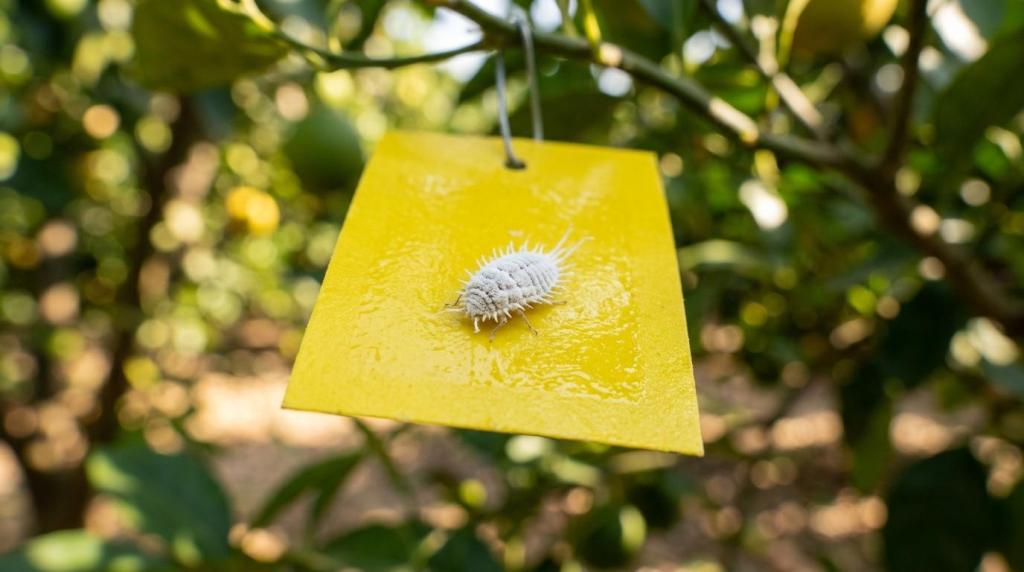
In citrus, IQ C.MEALYBUG-X uses a micro-encapsulated sex pheromone to attract male citrus mealybugs into sticky traps. This supports monitoring and suppression while helping growers act on real pest movement rather than assumptions.
The table below shows how these products fit into a push pull framework.
| Product | Main role | Target pest | Typical crop use | Delivery format |
|---|---|---|---|---|
| IQ RPW-PUSH | Repellent and feeding deterrent | Red palm weevil | Date palm, coconut, oil palm | Spray or trunk treatment |
| IQ SWD-X | Attractant for mass trapping | Spotted-wing drosophila | Berries and soft fruit | Lure dispenser with sticky trap |
| IQ C.MEALYBUG-X | Pheromone attractant | Citrus mealybug | Citrus orchards | Lure dispenser with sticky trap |
| IQ Sticky Boards & Rolls | Visual attraction and capture | Whiteflies, aphids, thrips and others | Protected crops and general IPM | Sticky cards and rolls |
The strength of this portfolio is not only the individual products, but the way they can be combined into a structured programme.
Benefits of push pull pest control products compared with conventional spraying
Conventional insecticides still have a place in many crop protection programmes, yet they are not always the best first tool. Push pull systems are built to reduce unnecessary exposure, focus action where it is needed and preserve the wider biology of the crop.
That creates practical benefits in both field and protected production:
- lower residue risk
- species-focused control
- fewer blanket applications
- better compatibility with beneficial insects
- useful monitoring data
- reduced resistance pressure
There is also a commercial advantage. When traps are catching target insects and repellent zones are protecting the crop, decisions become easier to justify. Inputs can be timed more accurately, scouting becomes more meaningful and the cost of repeated routine spraying can fall.
Longer-lasting lure technologies also help. Micro-encapsulated dispensers that remain active for weeks reduce the labour burden linked to frequent replacement, which matters across large acreages and distributed orchard blocks.
Why slow-release technology matters in push pull pest control products
Release profile is a major part of performance. If a lure fades too quickly or a repellent loses field presence after a short interval, the programme becomes inconsistent. That is why controlled-release and micro-encapsulated systems are so important in semiochemical pest control.
A slower, steadier release can support:
- Field longevity: fewer changes of lure and more stable attraction over time
- Consistent pressure management: less fluctuation between high and low activity periods
- Operational efficiency: simpler servicing across larger sites
This is especially relevant in commercial fruit, palm and citrus production, where pest pressure can vary block by block and timing errors are expensive.
Practical deployment of push pull pest control products in IPM programmes
The best results usually come from planning rather than from stand-alone product use. Repellents need to be placed where pest pressure begins, and attractants need to be positioned where interception is most useful. Trap density, servicing interval, crop stage and background pest levels all influence performance.
A good programme often starts before visible damage appears.
For that reason, technical guidance after purchase is as important as the active ingredient itself. Crop IQ Technology Ltd supports users with product selection, deployment advice and data-driven agronomy input so that the programme matches the crop, climate and pest cycle.
In practical terms, implementation often follows a sequence like this:
- Assess the target pest, crop stage and pressure history.
- Select the right repellent, lure and capture format.
- Install traps and apply push treatments at the correct timing.
- Review catches and crop observations at set intervals.
- Adjust density, placement or supporting interventions where needed.
This approach fits well with farms and agronomy teams that want better visibility of what is happening in the crop, not just a reactive spray timetable.
Push pull pest control products for sustainable commercial agriculture
Sustainability in crop protection is not only about replacing one active ingredient with another. It is about using biology more intelligently, reducing unnecessary pressure on the system and protecting yield with fewer side effects.
Push pull pest control products support that direction by working with insect behaviour rather than fighting it blindly. They can help protect high-value crops, preserve beneficial species, and keep pest management programmes workable over the long term.
For growers, distributors and agronomy teams looking to build lower-residue, science-led pest control strategies, behaviour-modifying tools offer a strong and practical route forward. Crop IQ Technology Ltd provides UK-made options with competitive pricing and technical support, giving professional users a clear path from product choice to in-field use.