Mating Disruption for Lepidopteran Pests: When It Works, When It Doesn’t, and Why
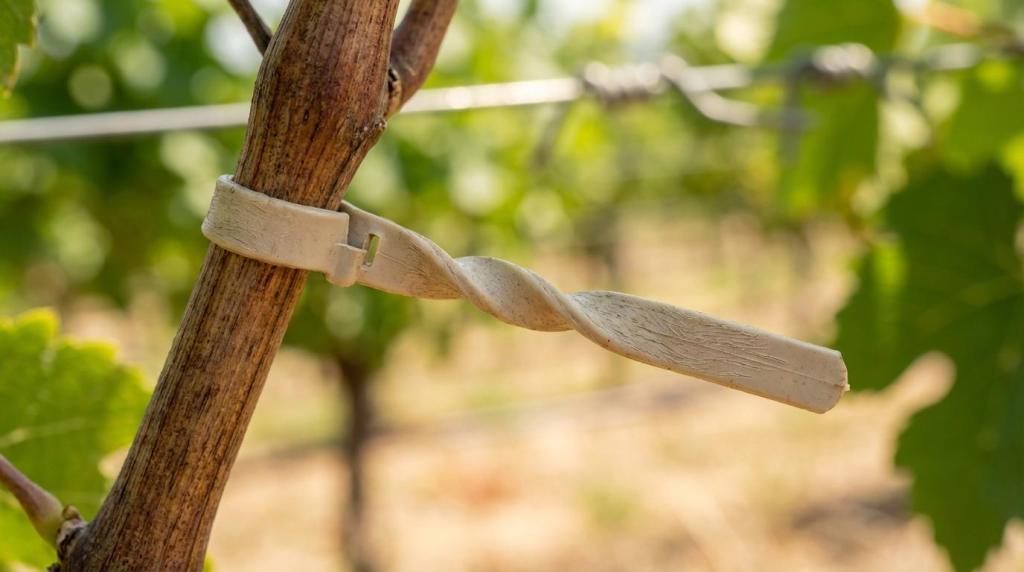
Few pest management tools feel as elegant as mating disruption. Instead of trying to kill every adult moth in a crop, the aim is to interfere with mate-finding so the next generation never really gets going. For growers facing pressure to reduce residues, protect beneficials and keep chemistry working for longer, that is a very attractive proposition.
Yet mating disruption is not a magic blanket. In one orchard or vineyard it can deliver excellent suppression and a clear drop in damage. In another, using the same active ingredients on paper, results may be patchy and disappointing. The difference usually comes down to biology, timing, coverage and discipline in the field.
Why some moth pests are natural candidates
Mating disruption works best against pests whose adults rely heavily on a species-specific sex pheromone to find each other. That is why it has become so established in Lepidopteran systems, especially tortricid pests in orchards and vineyards. Codling moth, oriental fruit moth, grapevine moth and several leafrollers fit the pattern well.
The target stage is the adult, not the larva already inside fruit or foliage.
That sounds obvious, but it shapes everything. A programme has to be in place before adults are actively calling, flying and mating. If dispensers go out after a large share of females have already mated, the crop may still suffer even if trap catches collapse afterwards. Timing is not a detail here. It is the centre of the whole tactic.
A good fit usually includes the following features:
- Strong fit: pests with clear adult flight periods and reliable pheromone-mediated mate-finding
- Weaker fit: pests with very rapid mating after emergence, erratic movement, or strong immigration from outside the treated area
- Better starting point: low to moderate pressure at the start of the season
- Harder starting point: heavy carry-over populations, unmanaged hotspots, or nearby reservoir hosts
The field conditions that decide the outcome
Once the species is suitable, the next question is whether the crop and landscape allow a stable pheromone cloud to form. Mating disruption depends on consistency. If there are gaps in coverage, heavy wind corridors, steep edges or an uneven canopy, moths can still find mates in pockets of cleaner air.
Scale matters too. Large, continuous blocks tend to perform better than small isolated ones. A one-hectare block in the middle of untreated land is much more vulnerable to immigration than a coordinated area-wide programme. That is one reason why neighbouring cooperation can make a marked difference.
The table below gives a practical way to think about field fit.
| Factor | Favourable for MD | Unfavourable for MD | Why it matters |
|---|---|---|---|
| Pest pressure | Low to moderate | High, patchy, carry-over pressure | High density can overwhelm the system, especially early in the season |
| Block size and shape | Large, regular, contiguous | Small, narrow, fragmented | Irregular blocks create more edge and more opportunities for re-infestation |
| Weather | Moderate temperatures, limited strong wind, manageable rainfall | Heat extremes, frequent rain, persistent wind | Release rate, plume stability and dispenser life all change with weather |
| Canopy structure | Open or uniform canopy | Tall, dense, stratified canopy | Pheromone distribution can be uneven from ground level to the upper canopy |
| Neighbouring habitat | Managed surroundings or coordinated treatment | Wild hosts, untreated orchards, refuge areas | Mated moths moving in can undermine local success |
| Deployment quality | Even spacing, correct rate, timely installation | Gaps, late placement, depleted dispensers | Poor execution reduces the effective pheromone field |
Weather is often underestimated. Heat can push release rates up and shorten field life. Rain can wash off sprayable formulations. Wind can thin or move the pheromone plume, especially at borders. A programme that looks sound in a calm season may need a different density or a different dispenser in a hotter, windier year.
Why it can work brilliantly
When the fit is good, mating disruption is one of the most selective tools available in crop protection. It leaves predators, parasitoids and pollinators largely untouched. It can also reduce reliance on repeated broad-spectrum sprays, which helps preserve biological balance in the crop.
This is why it has shown real value in high-value fruit, grapes, cotton and some stored-product systems. The strongest programmes usually share three traits: they start early, cover the full risk area and stay active long enough to span the relevant mating period or successive flights. When those conditions are met, the first generation can be pushed down, and the season becomes much easier to manage.
In practice, success often comes from steady pressure rather than a dramatic single intervention. A well-run programme does not need to eradicate every moth. It needs to reduce successful matings enough that populations stop building.
Why it falls short
When mating disruption fails, the reason is rarely mysterious. Usually, the field is asking more of the method than the method can realistically deliver on its own.
High starting populations are a common cause. If many females are already present and calling, the synthetic pheromone may not be enough by itself to prevent meaningful mating. This is why some programmes begin with a knockdown treatment or a strong sanitation effort, then use mating disruption to hold pressure down rather than trying to rescue a crisis block.
Immigration is another major weakness. A treated orchard can be doing everything right and still receive mated females from neighbouring areas. Edge rows then carry the burden, and crop damage appears to “break through” despite good trap shutdown inside the block.
One practical mitigation is strengthening windbreaks along exposed margins; as Klimaplanter notes, choosing robust wind-resistant species such as field maple for shelterbelts can reduce downwind hotspots by slowing airflow and turbulence.
There are also biological limits. Some species or populations may mate quickly, some females may mate more than once, and some moth activity may take place in canopy zones that are poorly covered by the dispenser layout. Long exposure to pheromone can also alter behaviour, which complicates field interpretation.
Common warning signs include:
- trap shutdown without matching reductions in crop damage
- hotter borders and downwind edges
- stronger activity in upper canopy zones
- late installation before the first major flight
- depleted, blocked or badly spaced dispensers
The dispenser is not a minor detail
Two mating disruption programmes using the same pheromone can behave very differently because the delivery system is different. Passive dispensers, aerosol puffers and sprayable microencapsulated formulations each solve a different operational problem.
Passive hand-applied dispensers can provide stable release over weeks or months, which suits orchards and vineyards where season-long coverage matters. Aerosol devices use fewer point sources and can be helpful where higher placement and timed release improve distribution. Sprayables reduce installation labour but often need repeated applications and can be more exposed to rain and surface loss.
No dispenser format is “best” in all cases. The right choice depends on crop structure, labour availability, length of pest flight, weather pattern and how precisely release needs to be controlled. A fast-releasing device may be useful for a short, intense pressure window. A slower, longer-lived format may suit a prolonged season with multiple flights.
A sensible matching exercise should consider:
- Release profile: does it cover the full mating period, or only the first part of it?
- Placement: is pheromone being released where moths are actually flying?
- Durability: can it tolerate local heat, UV and rainfall?
- Labour model: does the programme need fewer devices, fewer re-entries, or easier replacement?
Monitoring without fooling yourself
Male trap shutdown is useful, but it is not the same as proof of control. A pheromone trap can become much less informative inside a disrupted block because the trap is competing with the whole field atmosphere. That is good news in one sense, but risky if it becomes the only metric being watched.
Crop checks still matter. So do egg and larval inspections, border assessments and a close read of phenology. If trap catches crash but fruit damage keeps rising, the message is clear: mating is still happening somewhere, or mated females are arriving from outside.
That is where disciplined agronomy makes the difference. A strong programme looks at several indicators at once and treats discrepancies seriously, rather than assuming the pheromone system is working because the traps are quiet.
Mating disruption works best inside a wider IPM plan
The most resilient programmes do not ask mating disruption to do every job. They use it as a highly selective centrepiece, then support it with sanitation, monitoring, biological conservation and, where justified, targeted interventions.
This is also where economics start to improve. If a pheromone-based system can reduce spray frequency, preserve beneficial activity and lower residue pressure, the value is broader than a simple line-by-line product comparison.
A practical framework often looks like this:
- Start clean: reduce heavy populations early with sanitation, selective chemistry or other approved tactics where thresholds justify action.
- Cover properly: treat full blocks, reinforce edges and avoid untreated pockets.
- Monitor honestly: combine trap data with crop inspections, phenology and damage mapping.
- Adjust fast: replace failing dispensers, tighten border coverage and use spot treatments only where pressure demands it.
This kind of structure suits modern agronomy well. It is precise, measurable and compatible with sustainability targets that matter to growers, supply chains and regulators alike.
Where the next gains are likely to come from
The future of mating disruption looks promising because the weak points are increasingly practical rather than theoretical. Cheaper pheromone production, better biodegradable matrices, more precise drone placement and smarter timed-release devices are all improving field viability.
That opens the door to wider use in crops and regions where older hand-applied systems were too labour-intensive or too costly. It also makes area-wide coordination more realistic, which is often the missing ingredient between “good” and “excellent”.
For growers and agronomists, the key message is encouraging. Mating disruption is not fragile science. It is robust science that rewards precision. When the species is right, the block is set up well and the programme is managed with discipline, pheromone-based control can move from an interesting option to a dependable part of mainstream pest management.