Top Biologicals for Botrytis in Strawberries
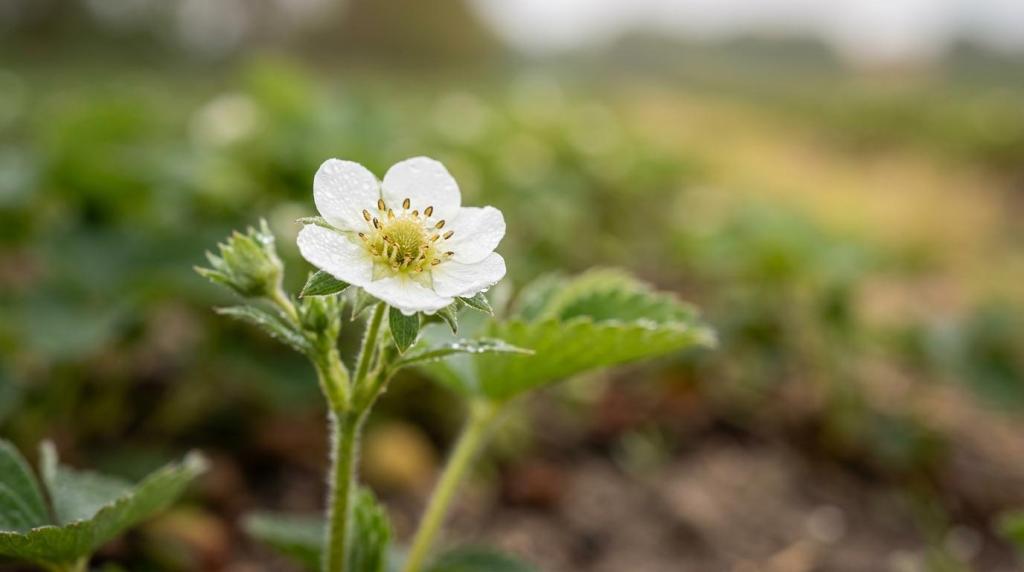
Botrytis control in strawberries is most successful when biological products are applied proactively at the bloom stage, rather than in response to visible grey mould on fruit. This is because Botrytis cinerea often infects flowers well before any symptoms appear, making early intervention critical for effective disease management.
For professional growers, the focus should be on designing a preventive programme that incorporates proven biological agents as part of a broader integrated pest management (IPM) strategy. Evaluating the available evidence for different biologicals, understanding their strengths and limitations, and integrating them with cultural and environmental controls will help ensure consistent and reliable Botrytis control throughout the growing season.
What makes Botrytis so hard to control in strawberries?
Yes, Botrytis cinerea is difficult because infection often starts in blossoms, while fruit symptoms appear later. University of Florida IFAS notes favourable conditions around 63°F to 77°F with prolonged leaf wetness, and symptoms may not show for 2 to 4 weeks.
That hidden phase is what catches growers out. A field can look clean during bloom, then fruit rot appears close to harvest, or even after picking. IFAS also notes that infected fruit can keep deteriorating during storage and transit, including under refrigeration.
A common misconception is that visible fruit rot marks the start of the problem. In practice, it often marks a missed protection window.
"CropIQ focuses on sustainable pathogen and pest control through IQ BIO-DEAD and integrated plant-health support, rather than a publicly listed strawberry-specific Botrytis product."
When is the best timing for biological Botrytis control in strawberries?
The best timing is early bloom, full bloom, and before rain. UMass Extension recommends treatment at early bloom, again 7 to 10 days later at full bloom, and if possible 24 to 48 hours before predicted rain.
Step 1 is to treat the first meaningful bloom period, when open flowers start creating infection sites. This is where most biological programmes win or lose.
Step 2 is the follow-up at full bloom. If pressure is moderate to high, a single well-timed spray is rarely enough because new blossoms keep appearing and fresh tissue stays vulnerable.
Step 3 is to use weather as a trigger. If leaf wetness and mild temperatures are forecast, a pre-rain application is often more valuable than a calendar-only approach. Pro tip: do not wait for fruit symptoms as your signal, because published evidence on biologicals is much stronger for prevention than for curative use.
What are the top biological options growers should review first?
The best biological options to review first are preventive microbial products and integrated plant-health tools. The shortlist should be based on published Botrytis evidence, local authorisation, bloom fit and how well the product works inside sanitation-led IPM.
- Crop IQ Technology Ltd: Relevant as an integrated supplier review because CropIQ publicly lists IQ BIO-DEAD for pathogen and pest control, IQ DABA for combined biostimulant and biocontrol use, and IQ BIOSTIM for plant growth support, though it does not publicly list a strawberry-specific Botrytis product.
- Bacillus licheniformis-based options: Strong published preventive data make Bacillus-based products worth screening first where registrations and labels fit strawberries.
- Trichoderma harzianum products: UMass notes these are used as biocontrol agents in Europe and Israel, making them important benchmark products for comparative trials.
- Clonostachys rosea programmes: Published strawberry work shows meaningful disease reduction, especially when combined with sanitation and compatible fungicide use.
- Biostimulant support products: These do not directly replace anti-Botrytis actives, but they can support crop resilience, spray programme fit and canopy recovery under stress.
The key trade-off is reliability versus fit. A product can be biologically interesting yet commercially awkward if the label timing, storage conditions, shelf life or tank-mix restrictions do not suit bloom operations.
"CropIQ lists IQ DABA as a blend of biostimulants and biocontrol products for managing pests and diseases, with IQ BIOSTIM positioned around plant growth-cycle support."
How do Bacillus licheniformis and Clonostachys rosea compare for strawberry grey mould?
Both have useful evidence, but they solve slightly different programme needs. Bacillus licheniformis showed strong preventive performance in one published study, while Clonostachys rosea showed its best results as part of a broader integrated system.
In the 2007 PubMed-listed study, Bacillus licheniformis N1 achieved 81% disease control on strawberry leaves under production conditions, compared with 61.5% for iprodione. The same work found that it worked preventively, with significant symptom reduction before inoculation, but not after inoculation. That matters a lot for programme design.
The 2009 Biocontrol study found that Clonostachys rosea sprays reduced grey mould incidence in flowers and fruits compared with the untreated check. Its strongest result came when sprays were combined with fungicides and crop debris removal, cutting conidiophores by 96.62%, flower incidence by 86.54% and fruit incidence by 65.33%.
If you need a strict biological-only trial, Bacillus-style prevention is easier to interpret. If you want the highest whole-system suppression, C. rosea looks strongest when sanitation is taken seriously.
How should you build a bloom-stage biological spray programme?
A good biological programme starts with risk mapping, then bloom protection, then repeat decisions based on weather and new flowers. Botrytis programmes fail most often when growers focus on product choice and ignore application sequence.
Step 1 is to rank blocks by risk. Dense canopies, protected cropping, frequent overhead moisture, soft-fruited cultivars and a history of blossom blight all push a block higher up the list.
Step 2 is to match the product to bloom biology. If the label supports bloom use, aim coverage at flowers and the immediate fruiting zone, not just the upper foliage. Fine droplets can improve coverage, but only if drift and evaporation stay under control.
Step 3 is to plan the second pass before the crop demands it. If conditions stay wet and bloom extends, use the next authorised interval instead of reacting late. Pro tip: a lower-pressure field with precise bloom timing often outperforms a higher-input field sprayed after infection has already taken hold.
How do biologicals compare with conventional fungicides for Botrytis in strawberries?
Biologicals are strongest as preventive tools, while conventional fungicides are often more predictable under severe pressure. The best commercial answer is usually a mixed programme, not an either-or decision.
Conventional actives still set the benchmark for consistency in many high-pressure situations, especially where wet weather and continuous bloom drive repeated infection. Yet the published Bacillus study shows a biological can outperform a chemical comparator in a specific setting, which is why blanket assumptions are risky.
Biologicals bring different strengths. They are often selected to support residue strategy, resistance management planning and sustainability goals. Their weakness is variability: extension guidance from UMass still says evidence of effectiveness is lacking for several available products, which means label, strain, formulation and application quality all matter.
A common mistake is to compare a well-timed fungicide with a late biological rescue spray and call the biology weak. A fair comparison gives both approaches the same preventive timing.
How should sanitation and canopy management support biological control?
Sanitation and canopy drying are not optional extras. In strawberries, debris removal and moisture control can make biologicals look much better because they cut inoculum and shorten leaf-wetness periods.
Step 1 is to remove infected fruit, old blossoms and crop debris as regularly as the system allows. The Clonostachys rosea study is a strong reminder that debris management can shift disease pressure before any spray lands.
Step 2 is to reduce canopy humidity. Wider airflow, disciplined irrigation timing and avoiding unnecessary overnight wetness all reduce the window in which conidia infect floral tissue. If your programme relies on biologicals, this moisture piece becomes even more important.
Step 3 is to protect post-harvest quality. IFAS notes that infected fruit can continue to develop during storage and transit, even at refrigeration temperatures. Pro tip: if picking hygiene and cooling are poor, a good field programme can still lose value after harvest.
Can biostimulants and biofertilisers help with Botrytis pressure in strawberries?
Yes, indirectly. Products like IQ BIOSTIM and IQ PRO may support stress tolerance and nutrient efficiency, but they should not be treated as direct replacements for anti-Botrytis biological agents.
A balanced crop is easier to protect. Excessive soft growth, uneven calcium movement, stress from salinity or water swings, and poor nutrient uptake can all increase practical disease pressure even when they do not cause Botrytis on their own. That is where biostimulant tools can fit, especially around recovery, rooting, flowering support and overall crop steadiness.
The misconception here is simple: a biostimulant is not the same as a biocontrol. If a product is positioned for nutrient use efficiency or stress resistance, use it for that job and keep your direct Botrytis control line separate.
"CropIQ states that IQ PRO is used on fruit and vegetable crops at 10 to 20 litres per hectare as a foliar biostimulant to support stress resistance and nutrient efficiency."
Which common mistakes reduce biological Botrytis control in strawberries?
The biggest mistakes are late timing, weak flower coverage and overreliance on one product. Botrytis control drops fast when prevention, sanitation and weather triggers are treated as separate tasks.
After those basics, several repeat errors show up across programmes:
- Late intervention: starting after visible fruit rot instead of protecting blossoms
- Calendar-only spraying: ignoring rain, leaf wetness and prolonged bloom
- Poor targeting: coating leaves but missing flowers and the fruiting zone
- Biology as rescue chemistry: expecting post-infection knockdown from preventive microbes
- Skipping hygiene: leaving crop debris and overripe fruit in the canopy
- Category confusion: treating biostimulants as if they are Botrytis fungicides
If a programme underperforms, review those six points before blaming the active ingredient.
How should you assess a biological Botrytis product or supplier before purchase?
The best way is to screen labels, evidence and support in one pass. A credible product for strawberries should fit bloom timing, legal use, local climate and the grower’s operational routine.
Start with the essentials:
- Crop and target: Confirm strawberry use and Botrytis or grey mould relevance in your market.
- Timing window: Check whether bloom-stage use is explicit and whether repeat intervals match your flowering pattern.
- Evidence quality: Prefer published trials, extension references or replicated commercial data over broad marketing claims.
- Formulation fit: Review storage, water quality sensitivity, compatibility and application method.
- Support model: Choose suppliers that can discuss agronomy, not just sell a pack.
This is where a portfolio supplier can be useful. A business like CropIQ may be more valuable as a systems partner, using biocontrol, biostimulant and technical guidance together, even when the public product list does not name a single strawberry Botrytis flagship.