Biodegradable Dispensers in Mating Disruption: Performance, Waste Reduction, and Compliance
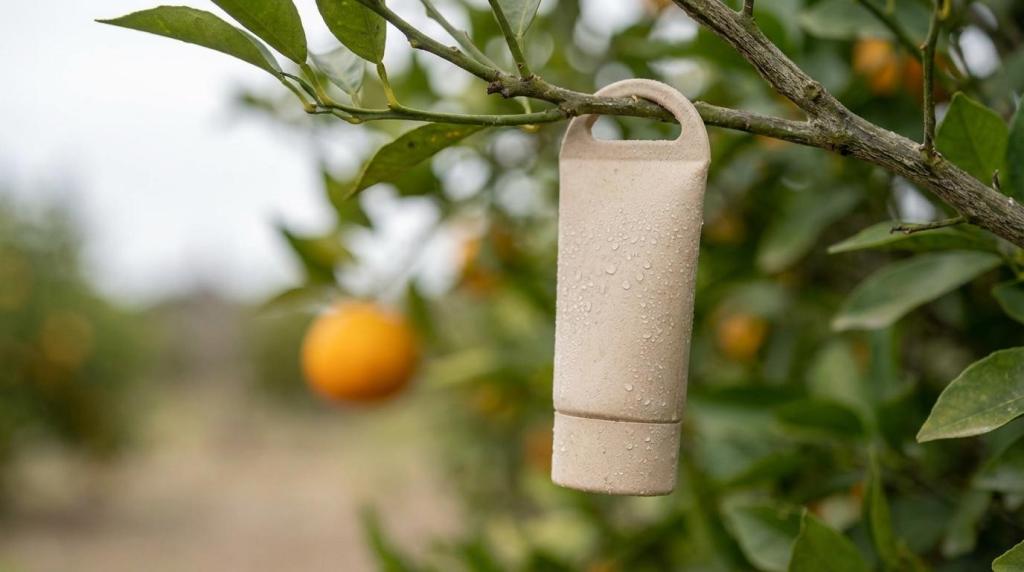
Mating disruption has always promised something powerful: precise pest control with far less pressure on beneficials, operators, and the wider environment. What has changed in recent years is the growing focus on the dispenser itself, not just the pheromone inside it.
That shift matters. A highly selective active can still arrive in a carrier that leaves hundreds or thousands of plastic remnants per hectare. For growers working under tighter sustainability targets, retailer standards, and rising waste-handling costs, that is no longer a minor detail. Biodegradable pheromone dispensers are now being judged on three fronts at once: do they perform, do they cut waste, and do they fit within current regulatory frameworks without creating new complications?
Why the carrier now matters as much as the chemistry
Traditional mating disruption devices have often relied on polyethylene, PVC, EVA, or other durable plastics. They do the job well in many settings, yet they also leave an end-of-life problem behind. In orchards, vineyards, protected crops, and storage sites, the clean-up burden can be real, especially where deployment density is high and replacement cycles are repeated through the season.
Biodegradable carriers change that conversation. Instead of treating the dispenser as a permanent plastic article that happens to hold pheromone, the newer approach treats it as a functional matrix with a planned end-of-life. The target is simple enough: stable release during the useful period, then degradation without persistent fragments.
That does not make material science secondary. If anything, it makes it more demanding. A good biodegradable dispenser has to manage diffusion, temperature response, and field durability while still breaking down in the right conditions after use. That balance is where much of the recent innovation has happened.
Field performance is the first test
Performance still comes first. No grower will accept lower efficacy in exchange for easier disposal, and the encouraging news is that the available evidence points in a positive direction.
Published work has shown that biodegradable dispensers can match, and in some cases exceed, the performance of conventional plastic carriers. In citrus, starch-based biodegradable dispensers loaded with California red scale pheromone delivered around a 70% reduction in fruit damage against untreated blocks. In greenhouse tomato, biodegradable mating disruption tubes for Tuta absoluta reduced male catches and crop damage strongly enough to outperform both a grower insecticide programme and a standard plastic dispenser under the same conditions.
A practical way to read the data is to separate three linked questions: can the carrier release pheromone at a biologically effective rate, can it hold that release long enough for the crop window, and can it do so under real weather or protected-crop conditions? So far, the answer appears increasingly favourable.
| Crop system / pest | Biodegradable dispenser evidence | Reported outcome | Practical take |
|---|---|---|---|
| Citrus / California red scale | Starch-based devices in field trials | About 70% less fruit damage than untreated control | Effective release is achievable in open-field systems |
| Greenhouse tomato / Tuta absoluta | Biodegradable tubes compared with conventional plastic devices | Strong reduction in male catches and leaf/fruit damage, with better results than standard plastic in the cited trial | Carrier design can affect both duration and field efficacy |
| Vineyard / Lobesia botrana | Commercial product reports from UK technology provider | Around 50 to 70% lower damage than competitor disruptors, according to company data | Promising, though independent published data remain desirable |
| Berry systems / Drosophila suzukii | Biodegradable kairomone lure reports | Around 20 to 50% lower damage than conventional lures, according to company data | Useful reminder that dispenser design matters beyond classic sex pheromones |
| Storage moths / Plodia and related species | Commercial development reports | Claimed 360-day longevity with broad trial exposure | Long-duration release could reshape stored-product programmes |
One point deserves emphasis. The active ingredient does not work in isolation. Release rate is the mechanism behind the field result, and it is shaped by polymer structure, pheromone load, surface area, thickness, temperature, and airflow. Trials in citrus have suggested that a threshold daily release rate was needed to deliver reliable disruption. That principle applies regardless of whether the matrix is biodegradable or conventional.
Weather still matters too. Warmer conditions accelerate volatilisation. Heavy rain and changing humidity can alter the pheromone cloud in open crops. Protected crops reduce some of that variation but create their own microclimate patterns. The current evidence does not suggest that biodegradable carriers are inherently weaker under these pressures. In some cases they may offer better field handling, including less brittleness in cold conditions and no retrieval requirement at the end of the programme.
Waste reduction turns into an operational advantage
Waste reduction is often described as a sustainability benefit, which it is, but the operational gain is just as important. Plastic dispensers have to be collected, separated, and sent into the appropriate waste stream. When labour is tight and margins are under pressure, that process carries a direct cost.
Biodegradable dispensers can reduce or remove much of that burden, depending on the product, label, and local waste route. Materials based on starch blends, PLA/PBAT systems, or other compostable formulations are designed to break down rather than persist as field litter or future microplastic sources. That is a major shift in end-of-life thinking.
For growers and agronomy teams, the immediate benefits tend to look like this:
- Less field retrieval
- Lower seasonal plastic accumulation
- Reduced waste transport
- Cleaner post-harvest blocks
- Better fit with farm sustainability reporting
This matters more in crops where mating disruption density is high. A few hundred devices per hectare may not sound dramatic on paper, yet across multiple sites and multiple seasons it becomes a visible waste stream. Once retailer audits and environmental reporting enter the picture, “less plastic left behind” becomes a measurable management benefit, not just a marketing phrase.
There is also a reputational element. Many supply chains now pay close attention to plastic reduction, especially where it can be achieved without sacrificing crop protection standards. A biodegradable dispenser supports the same IPM message already associated with pheromones, while removing one of the obvious contradictions of older systems.
Compliance remains essential, even with a greener dispenser
A biodegradable carrier does not place a mating disruption product outside pesticide regulation. The active substance, claimed use, label, and pattern of application still determine the regulatory route.
In the EU and UK context, pheromone products used for control remain within plant protection frameworks. Straight-chain lepidopteran pheromones have low-risk status in European regulation, which is helpful, but the finished product still needs proper authorisation and label compliance. Disposal language also remains relevant, including instructions linked to authorised waste collection points and packaging management.
In the United States, the distinction is also clear. Pheromones used purely in certain monitoring traps may fall outside registration in some cases, while pheromones used for active control, including mating disruption, are regulated. Australia follows a similar logic through APVMA, with monitoring uses and control uses treated differently.
That means biodegradable dispensers simplify some aspects of waste handling, but they do not remove the need for disciplined compliance.
A sensible compliance checklist should include:
- Product authorisation: confirm the formulation and use pattern are approved in the market of sale
- Label wording: follow deployment rate, timing, replacement interval, and disposal instructions exactly
- Material claims: ensure “biodegradable” or “compostable” statements are backed by recognised standards where relevant
- Record keeping: document placement, batch numbers, dates, and treated area for audit and traceability
- Organic compatibility: verify approval within the relevant certification scheme rather than assuming pheromone use is automatically accepted
There is good news here. In most cases, moving from plastic to biodegradable carriers does not create a new regulatory barrier. The pheromone chemistry is familiar to regulators. The main change is that end-of-life handling becomes easier to justify within existing waste and sustainability expectations.
What growers should assess before switching
Adoption works best when material choice is treated as part of programme design, not as a simple one-for-one replacement. A biodegradable dispenser may have similar efficacy to a plastic unit, yet the right deployment density, spacing, and replacement interval still need to be matched to crop, pest pressure, and season length.
In practice, the strongest assessment sits at the intersection of biology and operations. A greenhouse tomato grower will focus on fast canopy saturation and stable release in a warmer environment. A vineyard manager may prioritise season-long persistence and labour savings across large areas. A storage-site operator may place the highest value on very long duration and the ability to avoid frequent intervention.
The key questions are straightforward, even if the answers vary by crop:
- Release profile: does the dispenser maintain effective emission through the whole risk period?
- Field life: how does longevity hold up under the site’s actual temperature and humidity range?
- Deployment rate: can the programme deliver enough point sources per hectare or per building volume?
- End-of-life route: can the product genuinely be left in place or composted under the relevant conditions?
- Evidence base: are claims supported by peer-reviewed work, internal trial data, or both?
The last point deserves honesty. Peer-reviewed evidence already supports the wider principle that biodegradable dispensers can perform very well. Product-specific claims, though, still vary in the strength of published support. That is not unusual in agricultural technology, but it does mean growers should ask for trial design, site conditions, and comparator details before moving to wide-scale use.
Current development points to longer life and lower plastic dependency
Recent commercial development has pushed beyond the basic idea of “a dispenser that biodegrades”. The sharper goal is a dispenser that biodegrades while also improving release stability, persistence, and ease of deployment.
That is the direction seen in several products under development or already being promoted for specialist markets. Reported examples include vineyard systems for Lobesia botrana, berry lures for Drosophila suzukii, and long-duration stored-product moth disruptors. These products suggest that biodegradable formats are no longer limited to short-life niche uses.
Within that wider movement, Crop IQ Technology Ltd has highlighted several biodegradable dispenser platforms. Company-reported data indicate that its Lobesia mating disruption system can reduce grape damage relative to competing disruptors, while its SWD lure platform reports lower damage than standard attractant approaches. A stored-product moth system is being positioned around an especially long service life, with a stated 360-day duration based on field testing.
Those claims are commercially interesting because longevity changes the economics of mating disruption. A device that lasts longer can cut repeat applications, reduce labour, and help maintain a more stable pheromone background. In storage environments, where year-round pressure and hygiene standards are both demanding, long-duration biodegradable systems could be especially valuable.
Some caution is still appropriate. Not every company claim has peer-reviewed publication behind it, and that includes parts of the current biodegradable dispenser market. Yet the direction of travel is clear enough: material engineering is moving mating disruption towards lower waste, longer persistence, and better practical fit with modern IPM programmes.
The result is a stronger proposition than even a few years ago. Growers no longer have to choose between environmental intent and field performance as if they are competing goals. With well-designed biodegradable dispensers, those aims are starting to work together.